English
- English
- Esperanto
- Afrikaans
- Català
- שפה עברית
- Cymraeg
- Galego
- Latviešu
- icelandic
- ייִדיש
- беларускі
- Hrvatski
- Kreyòl ayisyen
- Shqiptar
- Malti
- lugha ya Kiswahili
- አማርኛ
- Bosanski
- Frysk
- ភាសាខ្មែរ
- ქართული
- ગુજરાતી
- Hausa
- Кыргыз тили
- ಕನ್ನಡ
- Corsa
- Kurdî
- മലയാളം
- Maori
- Монгол хэл
- Hmong
- IsiXhosa
- Zulu
- Yoruba
- অসমীয়া
- ଓଡିଆ
- Punjabi
- پښتو
- Chichewa
- Samoa
- Sesotho
- සිංහල
- Gàidhlig
- Cebuano
- Somali
- Тоҷикӣ
- O'zbek
- Hawaiian
- سنڌي
- Shinra
- Հայերեն
- Igbo
- Sundanese
- Lëtzebuergesch
- Malagasy
- Español
- Português
- русский
- Français
- 日本語
- Deutsch
- tiếng Việt
- Italiano
- Nederlands
- ภาษาไทย
- Polski
- 한국어
- Svenska
- magyar
- Malay
- বাংলা ভাষার
- Dansk
- Suomi
- हिन्दी
- Pilipino
- Türkçe
- Gaeilge
- العربية
- Indonesia
- Norsk
- تمل
- český
- ελληνικά
- український
- Javanese
- فارسی
- தமிழ்
- తెలుగు
- नेपाली
- Burmese
- български
- ລາວ
- Latine
- Қазақша
- Euskal
- Azərbaycan
- Slovenský jazyk
- Македонски
- Lietuvos
- Eesti Keel
- Română
- Slovenski
- मराठी
- Srpski језик

Have You Chosen the Right Doors for Your Steel-Structure Workshop?
Apart from the steel frame system, a steel structure workshop requires enclosure systems and other supporting facilities. Starting from this episode, we will dive into steel structure knowledge focusing on workshop selection solutions. Doors are indispensable infrastructure for buildings, and workshop main gates are components with complex functions. Unlike ordinary doors, workshop gates must meet basic access and anti-theft requirements while taking thermal insulation, sealing and easy operation into consideration.
A wide range of door options are available for workshop construction. Such diversity enables adaptation to different applications, usage frequencies and regional conditions. Blind selection of workshop gates should be avoided, as it will push up construction costs, cause resource waste and potentially bring inconveniences during operation.

At present, the mainstream workshop doors mainly include industrial lifting doors, roller shutter doors, sliding doors and swing doors. Door selection is not fixed. Different buildings adopt different options, and a single building can also adopt a combined scheme with multiple door types. Generally speaking, workshop doors need to satisfy two basic requirements: easy operation and high durability.
Industrial Lifting Doors
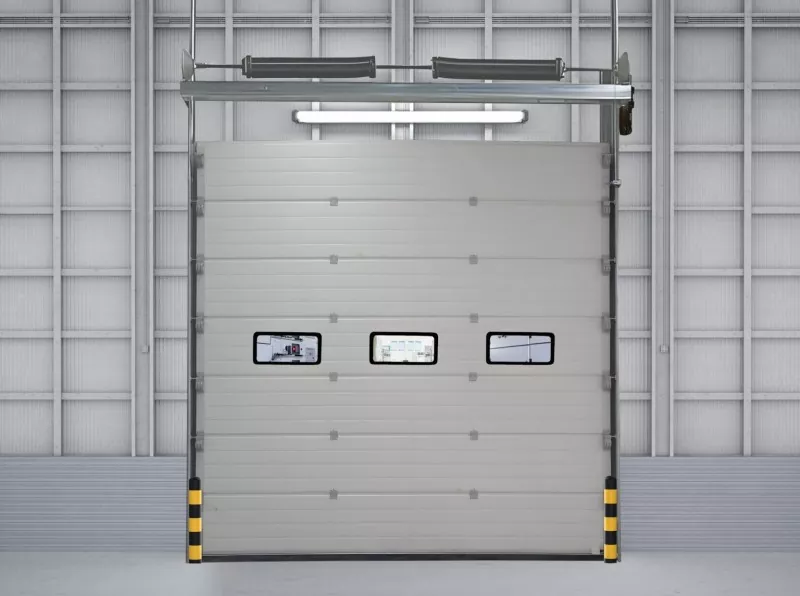
Industrial lifting doors represent the mainstream external door choice for large industrial workshops. They are constructed with double-layer galvanized color steel panels filled with high-density polyurethane foam, delivering outstanding thermal insulation, heat preservation, sound insulation and wind resistance performance. The doors open and close via standard lift, high-lift or vertical lift modes. They are suitable for workshops with large door openings and limited internal space, such as large warehouses, workshops requiring high thermal tightness, logistics centers, factories in coastal areas with high wind pressure, and sites with large door sizes and frequent opening and closing operations.
Roller Shutter Doors
Roller shutter doors fall into two main categories: high-speed roller shutters and industrial roller shutters. High-speed roller shutters adopt high-strength PVC or PVDF base fabric as the curtain material and are driven by variable frequency control systems for rapid opening and closing. They meet isolation demands for clean, constant-temperature environments with frequent vehicle and personnel passage. Mainly installed for indoor passages requiring constant temperature, humidity and cleanliness, they cannot be used as exterior doors.
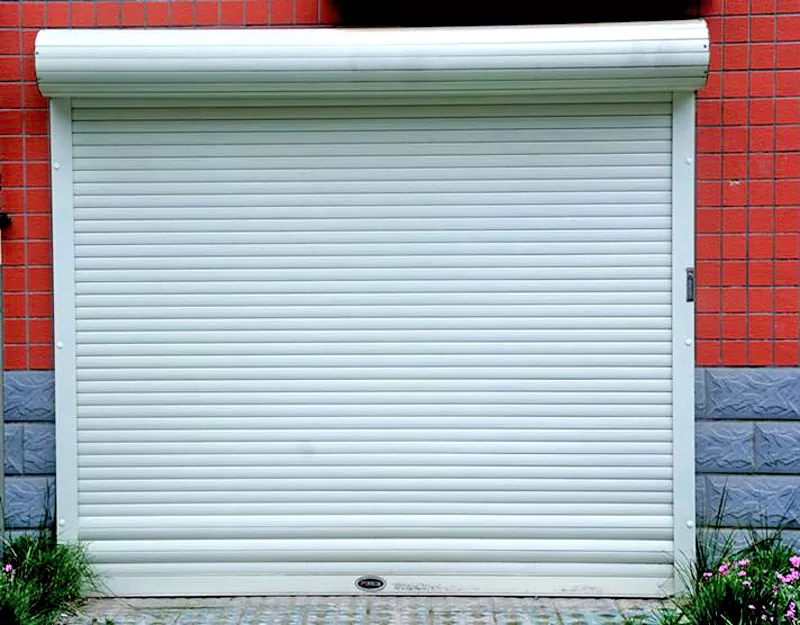
Industrial roller shutters utilize metal slats made of aluminum alloy, color steel or stainless steel. They are lifted and lowered through reel rotation. As a traditional industrial door type, they can serve as exterior doors and feature anti-theft performance, wind resistance, sturdiness and attractive appearance with wide application scenarios. Nevertheless, they are not suitable for interior doors or buildings with stringent requirements on thermal insulation and airtightness.
Sliding Doors
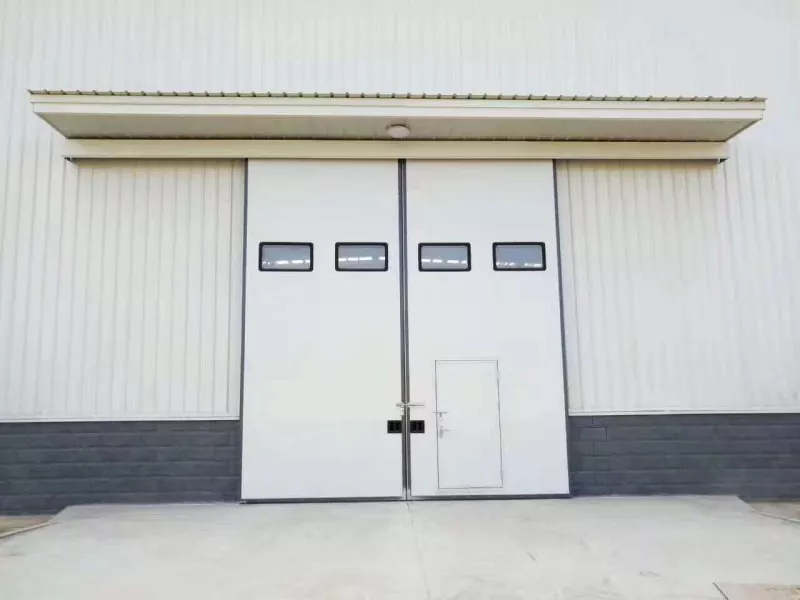
Sliding doors open by sliding along tracks. Featuring a simple structure and low cost, they require storage space on both sides of the doorway. According to load-bearing modes, industrial sliding doors are divided into top-hung suspension type and bottom-support load-bearing type. In terms of opening modes, they include one-way sliding and two-way sliding. Based on the number of door leaves, they can be single-leaf or multi-leaf overlapping sliding doors.
They are mainly manufactured from color steel sandwich panels, section steel, stainless steel or aluminum alloy, and can be fitted with lighting windows and wickets. Suitable for building entrances and exits with large door openings, they are widely adopted in traditional warehouses.
Swing Doors
Composed mainly of door frames, door leaves, hardware assemblies and sealing systems, swing doors operate by rotating around hinges. As the oldest and most widely used door type, they are applicable to locations with small door openings, low usage frequency and moderate sealing requirements, as well as rooms storing flammable and explosive hazardous materials and boiler rooms. They come in diverse materials and styles. For workshops, commonly adopted swing doors are made of cold-rolled steel plates, color steel sandwich panels and hot-dip galvanized steel plates, alongside steel-wood composite doors and electric swing doors.
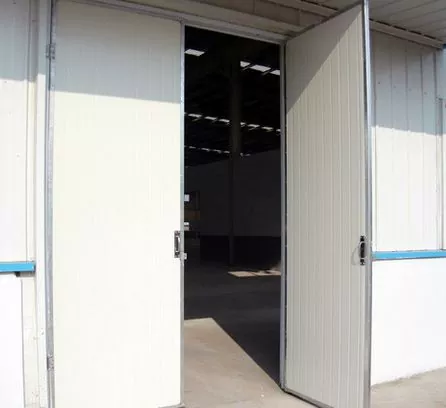
The selection of main doors for steel structure workshops essentially strikes an optimal balance among functional requirements, usage frequency, climatic conditions and investment budget. In practical projects, different door types are often combined for various zones within a single workshop to achieve better cost efficiency and operational convenience. In the next episode, we will focus on enclosure panels and share guidance on selecting roofing and wall panels for workshops.
Related News
- Recommended Roof Slope Values for Portal Frames and Light Steel Roof Structures
- Comprehensive Guide: Selecting the Right Exterior Wall Materials for Steel Industrial Facilities
- How Can Steel Structure City Footbridge Construction Accelerate the Formation of the Urban Pedestrian System?
- How Can Cold Chain Storage Be Properly Arranged in a Steel Structure Agricultural Product Logistics Center Construction?
- How do Container Exhibition Hall construction change traditional display spaces?
- How to Select the Appropriate Size for a Steel Frame Horse Stable Construction?
Leave me a message