English
- English
- Esperanto
- Afrikaans
- Català
- שפה עברית
- Cymraeg
- Galego
- Latviešu
- icelandic
- ייִדיש
- беларускі
- Hrvatski
- Kreyòl ayisyen
- Shqiptar
- Malti
- lugha ya Kiswahili
- አማርኛ
- Bosanski
- Frysk
- ភាសាខ្មែរ
- ქართული
- ગુજરાતી
- Hausa
- Кыргыз тили
- ಕನ್ನಡ
- Corsa
- Kurdî
- മലയാളം
- Maori
- Монгол хэл
- Hmong
- IsiXhosa
- Zulu
- Yoruba
- অসমীয়া
- ଓଡିଆ
- Punjabi
- پښتو
- Chichewa
- Samoa
- Sesotho
- සිංහල
- Gàidhlig
- Cebuano
- Somali
- Тоҷикӣ
- O'zbek
- Hawaiian
- سنڌي
- Shinra
- Հայերեն
- Igbo
- Sundanese
- Lëtzebuergesch
- Malagasy
- Español
- Português
- русский
- Français
- 日本語
- Deutsch
- tiếng Việt
- Italiano
- Nederlands
- ภาษาไทย
- Polski
- 한국어
- Svenska
- magyar
- Malay
- বাংলা ভাষার
- Dansk
- Suomi
- हिन्दी
- Pilipino
- Türkçe
- Gaeilge
- العربية
- Indonesia
- Norsk
- تمل
- český
- ελληνικά
- український
- Javanese
- فارسی
- தமிழ்
- తెలుగు
- नेपाली
- Burmese
- български
- ລາວ
- Latine
- Қазақша
- Euskal
- Azərbaycan
- Slovenský jazyk
- Македонски
- Lietuvos
- Eesti Keel
- Română
- Slovenski
- मराठी
- Srpski језик

New Development Trends of the Steel Structure Industry in the Next Five Years
The meeting of the Political Bureau of the Central Committee held on April 28 released an important signal that China’s national infrastructure system will undergo comprehensive upgrading and restructuring. With the implementation of the six-major network strategy, the steel structure industry will become a core mainstream track for industrial development during the 15th Five-Year Plan period. The next five years will be a critical period for the transformation and development of the steel structure industry.
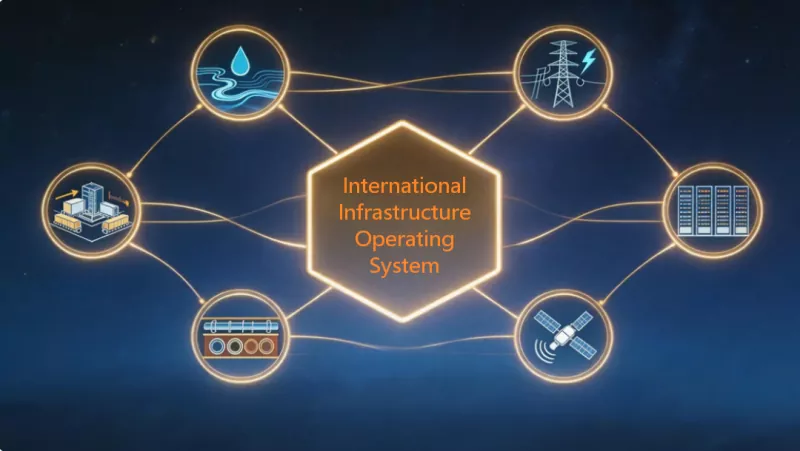
The implementation of the six-major network strategy covers six major network systems: water network, new power grid, computing power network, new-generation communication network, urban underground pipe network and modern logistics network. These six networks form a complete national infrastructure operating system.
The core of this infrastructure reform lies in prioritizing the real economy and consolidating fundamental foundations. It brings both opportunities and challenges. The steel structure industry is embracing a major development dividend, while the industry will also witness structural internal differentiation.
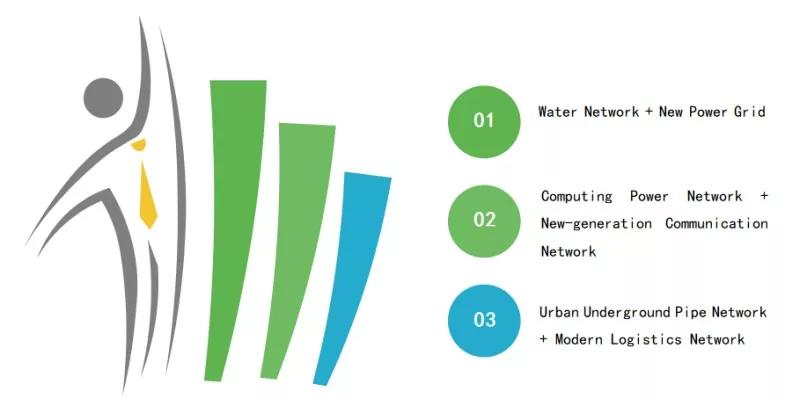
The national infrastructure operating system advances along three major directions, each reflecting changing demand for steel structures in the engineering industry.
First, building the security lifeline of the water network and new power grid brings a disruptive restructuring of the energy structure, driving a substantial increase in rigid demand for steel structures.
Second, consolidating the prominent position of the computing power network and new-generation communication network makes computing power and communication engineering a high-value track in the field of high-end steel structure projects.
Third, constructing efficient corridors for urban underground pipe networks and modern logistics networks guarantees the safe operation of cities and the efficiency of industrial chains with policy support, unlocking broad untapped potential for the development of the steel structure industry.
Under the dual screening of economic and physical logic, steel structures have become a new development trend. According to industry research and trend analysis, during the 15th Five-Year Plan period, the demand for steel structures driven solely by the construction of new power grids will increase by more than 40%, and the growth rate of demand for heavy steel structures in computing center construction may exceed 60%.
|
Physical Foundation |
Steel Consumption per Unit |
|
UHV Power Grid |
200 tons |
|
Offshore Wind Power Grid |
12000 tons |
|
Computing and Intelligent Network |
8000 tons |
Amid this round of infrastructure boom, underlying challenges are quietly building up.
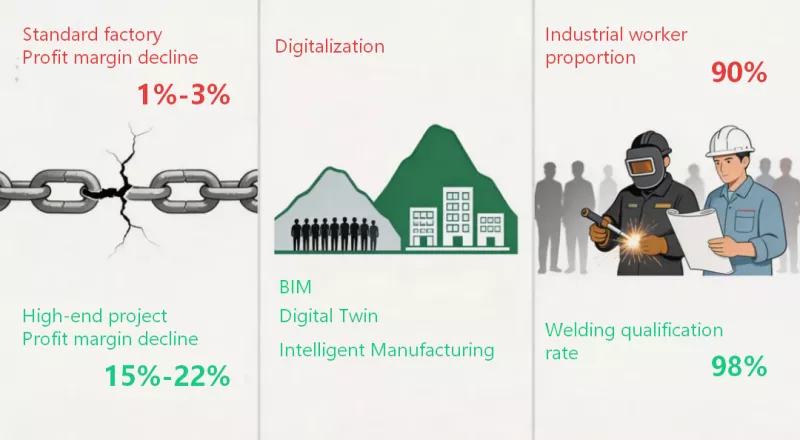
First, a structural divide is taking shape, and general steel structure businesses are facing fierce market squeeze. The discourse system of the engineering industry is shifting toward capability-driven development. Only steel structure enterprises with specialized technical capabilities can secure more profits in the future.
Second, the digital divide is becoming a matter of survival, and the Matthew effect within the steel structure industry is intensifying. High-value-added orders are increasingly concentrated among digitally empowered enterprises. Steel structure companies need to adopt intelligent manufacturing to improve management and production efficiency.
Third, acceptance standards have been greatly raised, putting steel structure enterprises under quality pressure. Quality standards are driving asset revaluation and greater recognition of industrial workers. Human capital advantages are evolving into new core competitiveness for enterprises, and highly skilled talents have become their most vital assets. This means long-term stable employment is becoming an inevitable industry trend.
Against the backdrop of the six major networks, the steel structure industry is embracing new opportunities. The new power grid and computing power network have become high-end sectors that test corporate profitability and professional capabilities.
The logistics network stands as the core area for large-scale and standardized industrial development.
The water network and urban underground pipe network offer policy support for enterprises pursuing refined and specialized operation.
The communication network market delivers steady growth momentum for regional industrial development.
Therefore, enterprises need to seize new development opportunities while responding to emerging challenges of the era, and achieve transformative development from four aspects.
First, build core technological competitiveness, develop segmented professional capabilities, increase investment in research and development, and focus on investing in special technologies directly related to the six major networks.
Second, open up the digital development path and accelerate digital transformation. Prioritize breakthroughs in in-depth digital design capabilities, welding robots and supporting AI quality inspection systems, as well as digital twin delivery platforms.
Third, expand value-added services. Instead of relying solely on component processing and installation, convert one-off project income into long-term and sustainable cash flow.
Fourth, clarify market positioning and build competitive advantages. Central enterprises take the lead in system integration, while private enterprises focus on professional segmented fields. The path of specialization, refinement, differentiation and innovation provides viable living space for small and medium-sized enterprises.
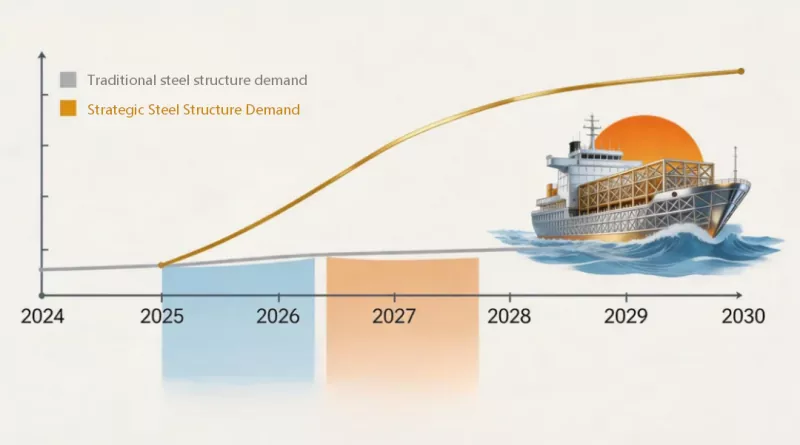
During the 15th Five-Year Plan period, the super network system will evolve from individual project construction to systematic networking, and from pilot operation to coordinated overall operation. The steel structure industry is facing both market expansion and industrial upgrading. High-quality development has become increasingly urgent, value-added benefits are rising markedly, and national strategies are leading industrial transformation and upgrading.
Steel structure enterprises must grasp three key and arduous tasks: specialized technology research and development, digital capability building, and skilled industrial worker training. By accurately engaging in the six major network systems and establishing a new capability system, enterprises can seize the developmental opportunities of the new era.
Related News
- How to Choose C and Z Purlins for Steel Structure Warehouses?
- Which Residential Projects Are Suitable for Modular Shipping Container Homes?
- What Are the Differences Between Prefabricated Container Motel Construction and Traditional Motels?
- What construction costs can be reduced by using steel structure canteen construction?
- What Are the Application Scenarios of Customized Residential Container Warehouse Construction?
- Recommended Roof Slope Values for Portal Frames and Light Steel Roof Structures
Leave me a message
New Products


News Recommendations