English
- English
- Esperanto
- Afrikaans
- Català
- שפה עברית
- Cymraeg
- Galego
- Latviešu
- icelandic
- ייִדיש
- беларускі
- Hrvatski
- Kreyòl ayisyen
- Shqiptar
- Malti
- lugha ya Kiswahili
- አማርኛ
- Bosanski
- Frysk
- ភាសាខ្មែរ
- ქართული
- ગુજરાતી
- Hausa
- Кыргыз тили
- ಕನ್ನಡ
- Corsa
- Kurdî
- മലയാളം
- Maori
- Монгол хэл
- Hmong
- IsiXhosa
- Zulu
- Yoruba
- অসমীয়া
- ଓଡିଆ
- Punjabi
- پښتو
- Chichewa
- Samoa
- Sesotho
- සිංහල
- Gàidhlig
- Cebuano
- Somali
- Тоҷикӣ
- O'zbek
- Hawaiian
- سنڌي
- Shinra
- Հայերեն
- Igbo
- Sundanese
- Lëtzebuergesch
- Malagasy
- Español
- Português
- русский
- Français
- 日本語
- Deutsch
- tiếng Việt
- Italiano
- Nederlands
- ภาษาไทย
- Polski
- 한국어
- Svenska
- magyar
- Malay
- বাংলা ভাষার
- Dansk
- Suomi
- हिन्दी
- Pilipino
- Türkçe
- Gaeilge
- العربية
- Indonesia
- Norsk
- تمل
- český
- ελληνικά
- український
- Javanese
- فارسی
- தமிழ்
- తెలుగు
- नेपाली
- Burmese
- български
- ລາວ
- Latine
- Қазақша
- Euskal
- Azərbaycan
- Slovenský jazyk
- Македонски
- Lietuvos
- Eesti Keel
- Română
- Slovenski
- मराठी
- Srpski језик

Heavy Steel Structure: The Backbone of Industrial Buildings
Heavy steel structure, an industry term distinguished from light-weight building steel structure, is the most widely adopted type of steel construction. Thanks to its unique advantages, it has become the primary choice for heavy-duty workshops, super high-rise buildings, large stadiums, power plants and other structures, and enjoys the broadest application in the industrial sector.
In the steel structure industry, heavy steel and light steel are commonly used terms. Classified by structural form, load-bearing capacity and application scenarios, they are conventional names essentially defined by the stress characteristics and design principles of structural systems.
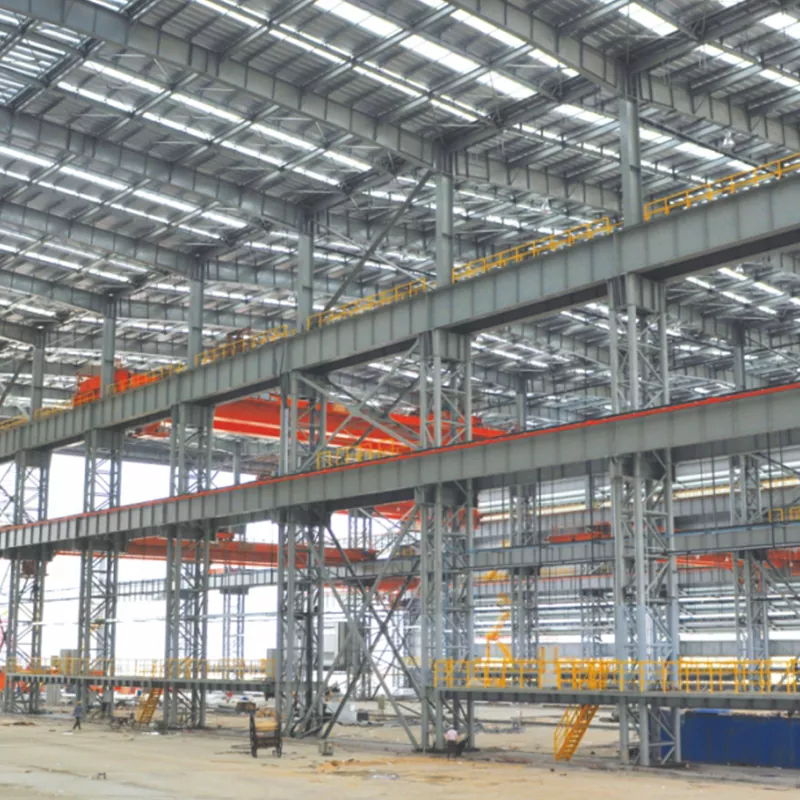
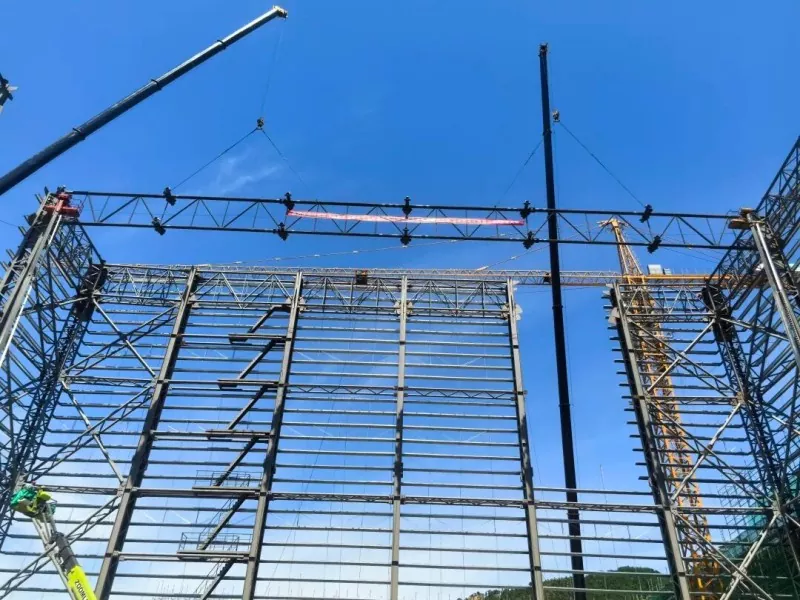
Heavy steel structures generally refer to load-bearing structural systems composed of thick steel plates, large-section section steels or lattice components, which are mainly used to withstand loads from heavy-duty cranes and vibration of large equipment, or to achieve ultra-long spans.
Heavy steel structures are mainly used to bear loads from heavy-duty cranes and vibration of large equipment, or to create extra-long spans. Thanks to their excellent mechanical properties, they have become the preferred structural system for heavy industrial workshops, energy facilities, shipbuilding and other fields. Their core industrial applications fall into three major categories: heavy machinery manufacturing, power and energy facilities, as well as metallurgy and raw material production.
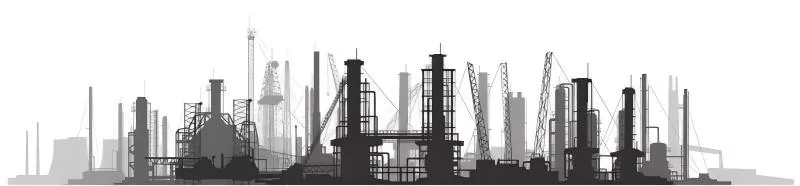
Heavy steel structures boast multiple strengths, making them a leading choice in the industrial sector. Workshops built with heavy steel structures are equipped with crane girder systems capable of supporting cranes of over 100 tons, fully meeting the requirements for hoisting, assembling and transporting large and ultra-heavy equipment.
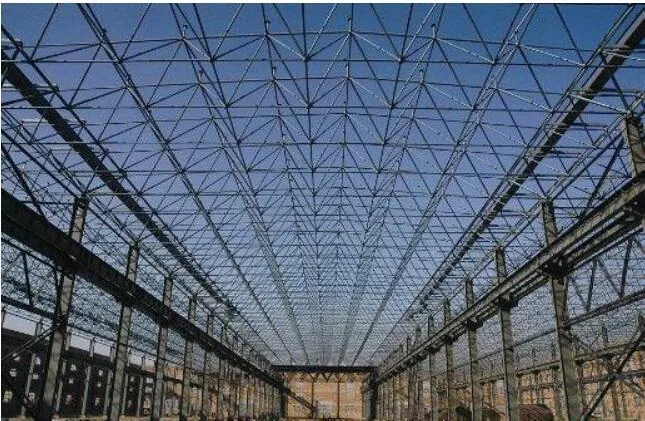
Traditional concrete column grid structures require numerous columns, which hinder material handling and process layout. By adopting long-span steel roof trusses and grid structures, heavy steel structures can create column-free spaces spanning up to hundreds of meters, fully meeting the demand for continuous space in modern industry. The painting workshop of FAW Jiefang Qingdao Base, with a single span of 36 meters, is a typical example of this advantage.
In addition, steel features good ductility and environmental friendliness. Steel structures also achieve a high level of industrialization, enabling parallel operations of factory prefabrication and on-site construction. Therefore, heavy steel structures offer the advantages of fast construction, excellent seismic performance and sustainable development.
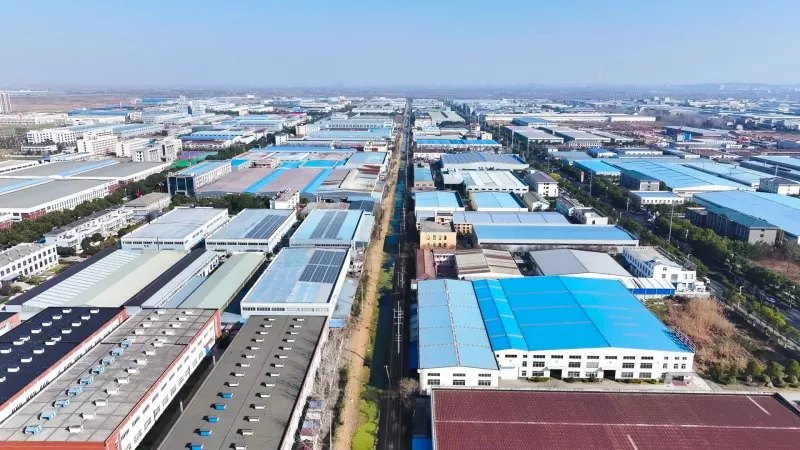
Heavy steel structures are mainly used to bear loads from heavy-duty cranes and vibration of large equipment, or to create extra-long spans. Thanks to their excellent mechanical properties, they have become the preferred structural system for heavy industrial workshops, energy facilities, shipbuilding and other fields. Their core industrial applications fall into three major categories: heavy machinery manufacturing, power and energy facilities, as well as metallurgy and raw material production.
Related News
- How to Choose C and Z Purlins for Steel Structure Warehouses?
- Which Residential Projects Are Suitable for Modular Shipping Container Homes?
- What Are the Differences Between Prefabricated Container Motel Construction and Traditional Motels?
- What construction costs can be reduced by using steel structure canteen construction?
- What Are the Application Scenarios of Customized Residential Container Warehouse Construction?
- Recommended Roof Slope Values for Portal Frames and Light Steel Roof Structures
Leave me a message
New Products


News Recommendations