English
- English
- Esperanto
- Afrikaans
- Català
- שפה עברית
- Cymraeg
- Galego
- Latviešu
- icelandic
- ייִדיש
- беларускі
- Hrvatski
- Kreyòl ayisyen
- Shqiptar
- Malti
- lugha ya Kiswahili
- አማርኛ
- Bosanski
- Frysk
- ភាសាខ្មែរ
- ქართული
- ગુજરાતી
- Hausa
- Кыргыз тили
- ಕನ್ನಡ
- Corsa
- Kurdî
- മലയാളം
- Maori
- Монгол хэл
- Hmong
- IsiXhosa
- Zulu
- Yoruba
- অসমীয়া
- ଓଡିଆ
- Punjabi
- پښتو
- Chichewa
- Samoa
- Sesotho
- සිංහල
- Gàidhlig
- Cebuano
- Somali
- Тоҷикӣ
- O'zbek
- Hawaiian
- سنڌي
- Shinra
- Հայերեն
- Igbo
- Sundanese
- Lëtzebuergesch
- Malagasy
- Español
- Português
- русский
- Français
- 日本語
- Deutsch
- tiếng Việt
- Italiano
- Nederlands
- ภาษาไทย
- Polski
- 한국어
- Svenska
- magyar
- Malay
- বাংলা ভাষার
- Dansk
- Suomi
- हिन्दी
- Pilipino
- Türkçe
- Gaeilge
- العربية
- Indonesia
- Norsk
- تمل
- český
- ελληνικά
- український
- Javanese
- فارسی
- தமிழ்
- తెలుగు
- नेपाली
- Burmese
- български
- ລາວ
- Latine
- Қазақша
- Euskal
- Azərbaycan
- Slovenský jazyk
- Македонски
- Lietuvos
- Eesti Keel
- Română
- Slovenski
- मराठी
- Srpski језик

What Are the Construction Technologies for Steel Structure Hospitals?
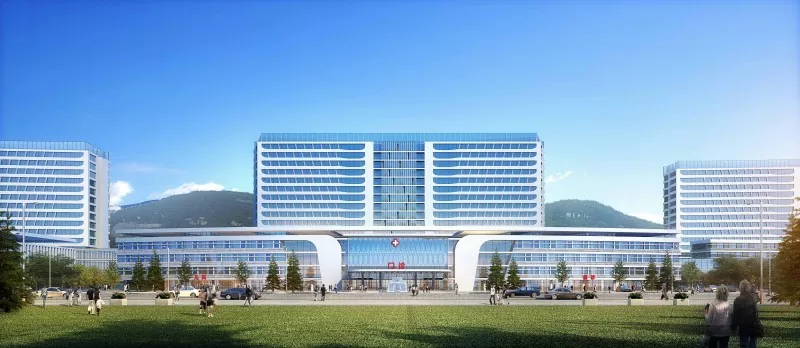
Hospital buildings differ from ordinary public and commercial buildings, as they impose extremely stringent requirements on structural safety, construction efficiency, spatial flexibility and building functionality. Boasting multiple advantages including light weight with high strength, outstanding seismic performance, eco-friendly construction, rapid erection and strong load-bearing capacity, steel structures stand out among various construction schemes and have become the preferred structural type for hospital construction nowadays. Among a wide range of core construction technologies, this article mainly discusses three out of six key technologies applied in constructing steel structure hospitals, namely the installation technology of self-positioning stud-free rigid connection joints for steel structure modules, the ground modular assembly technology for tree-shaped column canopy steel structures, and the combined installation technology of buckling-restrained braces and viscous dampers.
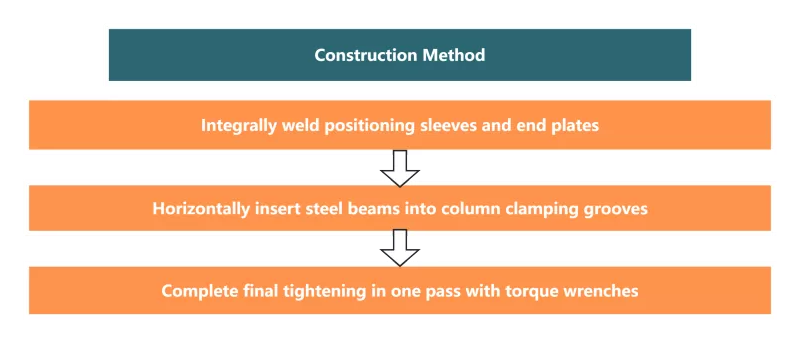
Self-positioning Stud-free Rigid Connection Joint Installation Technology for Steel Structure Modules
This self-positioning stud-free rigid connection joint installation technology for steel structure modules realizes rapid self-positioning of joints via limit plates and positioning plates, with high-strength grout poured inside connecting joints. It boasts prominent merits including simple operation, high installation efficiency and strong load-bearing capacity. Its installation efficiency is tripled compared with conventional construction methods, steel consumption is cut by nearly 30%, and the theoretical maximum building height can reach 100 meters.
When applied to hospital construction, this technology delivers core practical values: the installation time for a single joint is shortened from 40 minutes to 8 minutes; no protruding studs remain on the bottom surface of floor slabs; it meets the special seismic fortification requirement of intensity 8; and potential safety hazards caused by open-flame operations are greatly reduced.
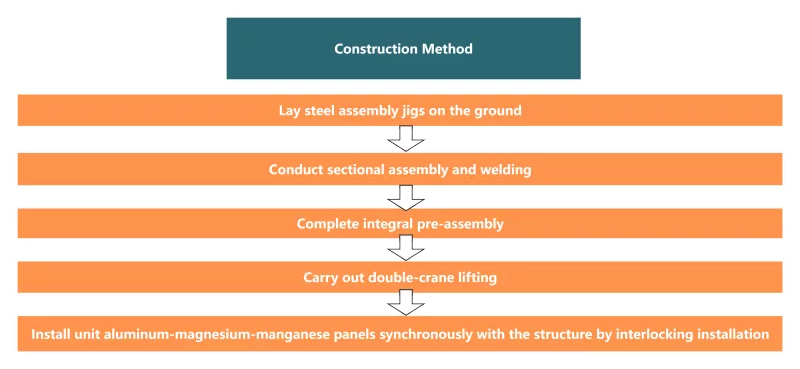
Ground Modular Assembly Technology for Tree-shaped Column Canopy Steel Structures
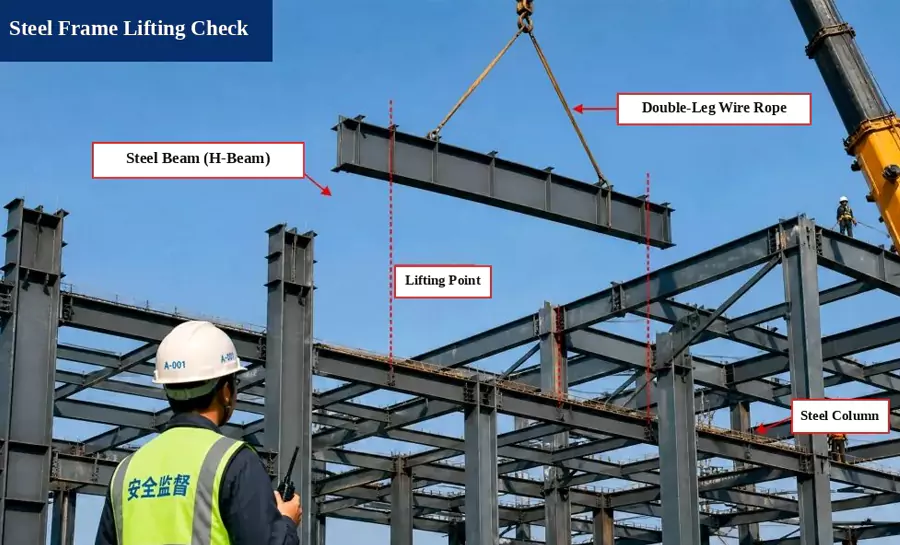
This technology refers to a construction method where all module segments are assembled and welded completely on ground steel jigs before integral hoisting. Compared with the traditional construction method for space curved tree-shaped columns, it solves the problems of high operation risks, poor assembly precision and uncontrollable welding quality arising from high-altitude scattered installation. It can minimize the closure duration of the main hospital entrance, strengthen welding quality control, meet the architectural aesthetic requirements of the hospital entrance and reduce risks of high-altitude operations.
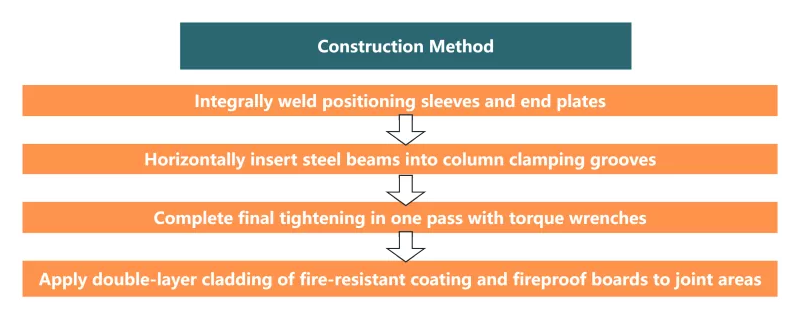
Combined Installation Technology of Buckling-Restrained Braces and Viscous Dampers
This combined installation technology of buckling-restrained braces (BRB) and viscous dampers (VD) is a two-stage seismic mitigation technology that integrates the stiffness-based energy dissipation advantage of BRBs and the velocity-based energy dissipation advantage of VDs, with an overall seismic reduction efficiency of 30%~40%. It helps maintain essential medical operation order during earthquakes. Compared with the traditional scheme of thickening shear walls, this technical solution avoids occupying effective usable floor area.
In the next issue, we will continue to introduce the modular installation technology of integrated electromechanical pipelines, the rapid installation technology of prefabricated machine rooms and the full-process digital traceability technology for steel components. Having been deeply engaged in the steel structure industry for 21 years, EHSS specializes in the manufacturing of steel structural components and installation works, safeguarding your projects with professional capabilities. Stay tuned to EHSS for more professional technical information on steel structures.
Related News
- How to Select the Appropriate Size for a Steel Frame Horse Stable Construction?
- On-Site Steel Structure Assembly + Integral Hoisting Construction Workflow + Key Considerations
- Why Choose a Double Layer Prefab Steel Frame House Construction for Modern Living?
- Nine Key Points for the Design and Construction of Steel Structure Factory Buildings
- How Can Steel Structure Chicken Shed Construction Improve the Management of Poultry Farms?
- "Locomotive-Style" Industrial Buildings: Should the 3-Story Office Be Steel or Concrete?
Leave me a message