English
- English
- Esperanto
- Afrikaans
- Català
- שפה עברית
- Cymraeg
- Galego
- Latviešu
- icelandic
- ייִדיש
- беларускі
- Hrvatski
- Kreyòl ayisyen
- Shqiptar
- Malti
- lugha ya Kiswahili
- አማርኛ
- Bosanski
- Frysk
- ភាសាខ្មែរ
- ქართული
- ગુજરાતી
- Hausa
- Кыргыз тили
- ಕನ್ನಡ
- Corsa
- Kurdî
- മലയാളം
- Maori
- Монгол хэл
- Hmong
- IsiXhosa
- Zulu
- Yoruba
- অসমীয়া
- ଓଡିଆ
- Punjabi
- پښتو
- Chichewa
- Samoa
- Sesotho
- සිංහල
- Gàidhlig
- Cebuano
- Somali
- Тоҷикӣ
- O'zbek
- Hawaiian
- سنڌي
- Shinra
- Հայերեն
- Igbo
- Sundanese
- Lëtzebuergesch
- Malagasy
- Español
- Português
- русский
- Français
- 日本語
- Deutsch
- tiếng Việt
- Italiano
- Nederlands
- ภาษาไทย
- Polski
- 한국어
- Svenska
- magyar
- Malay
- বাংলা ভাষার
- Dansk
- Suomi
- हिन्दी
- Pilipino
- Türkçe
- Gaeilge
- العربية
- Indonesia
- Norsk
- تمل
- český
- ελληνικά
- український
- Javanese
- فارسی
- தமிழ்
- తెలుగు
- नेपाली
- Burmese
- български
- ລາວ
- Latine
- Қазақша
- Euskal
- Azərbaycan
- Slovenský jazyk
- Македонски
- Lietuvos
- Eesti Keel
- Română
- Slovenski
- मराठी
- Srpski језик

How to Select Steel Floor Decking? Master These Main Types
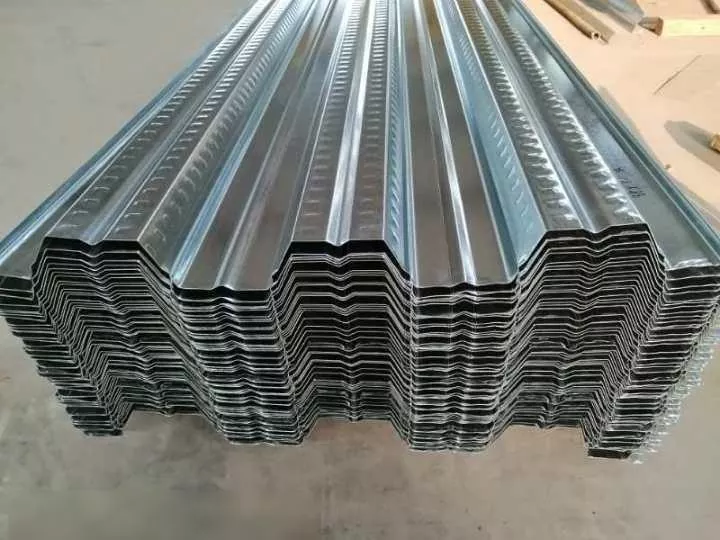
Steel floor decking is the core component of the floor system in steel-structure buildings. As a type of profiled steel sheet for construction, it provides a formwork-free and propping-free solution for concrete floor slabs. It is roll-formed by cold bending with V-shaped, U-shaped or trapezoidal corrugated cross-sections. Its model number is structured as: prefix ("YX" or "YXB") + wave height-wave pitch-effective width. There are two main structural systems: conventional profiled steel floor decking (open-type, re-entrant-type, closed-type) and steel bar truss floor decking.
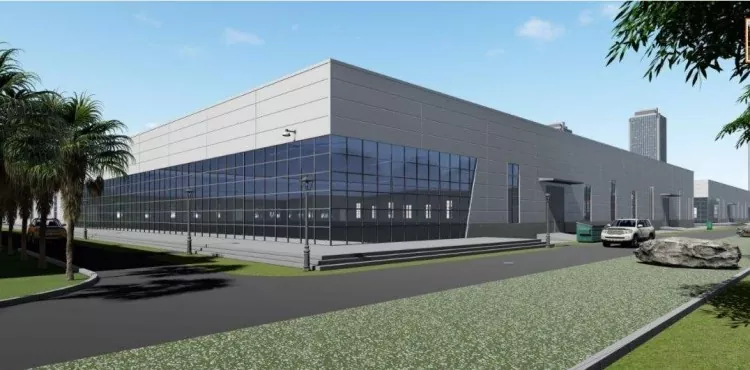
Conventional profiled-steel floor decking is made of galvanized steel sheets. It is laid directly on steel beams and firmly welded to steel beams by studs penetrating through the steel sheets. It can bear the self-weight of wet concrete and construction loads. According to cross-section forms, it can be divided into open-type floor decking, re-entrant (dovetail-type) floor decking and closed-type floor decking.
Open-Type Floor Decking
It features V-shaped or trapezoidal open cross-sections. It only serves as a permanent formwork during construction, with advantages of convenient installation, low cost and high market share.
Re-entrant (Dovetail-Type) Floor Decking
It adopts a dovetail-shaped cross-section. Its bottom opening is significantly narrower than that of the open-type decking, which enables mechanical interlocking with concrete. Its core advantage lies in improved fire resistance and anti-corrosion performance.
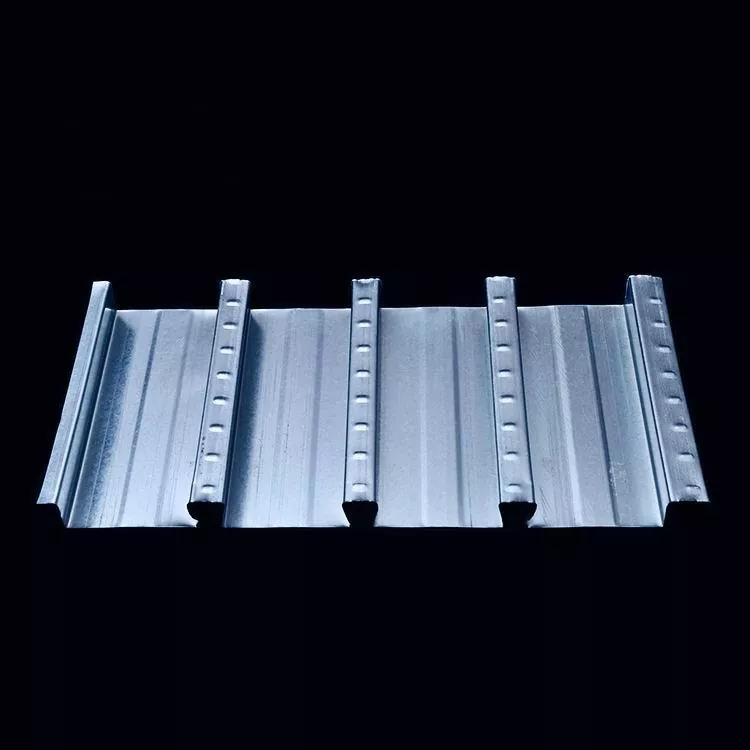
Closed-Type Floor Decking
It is the most widely used type with optimal comprehensive performance at present. Its cross-section is fully closed so that it can be fully encased by concrete. It features core advantages of smooth and neat appearance and excellent composite action.
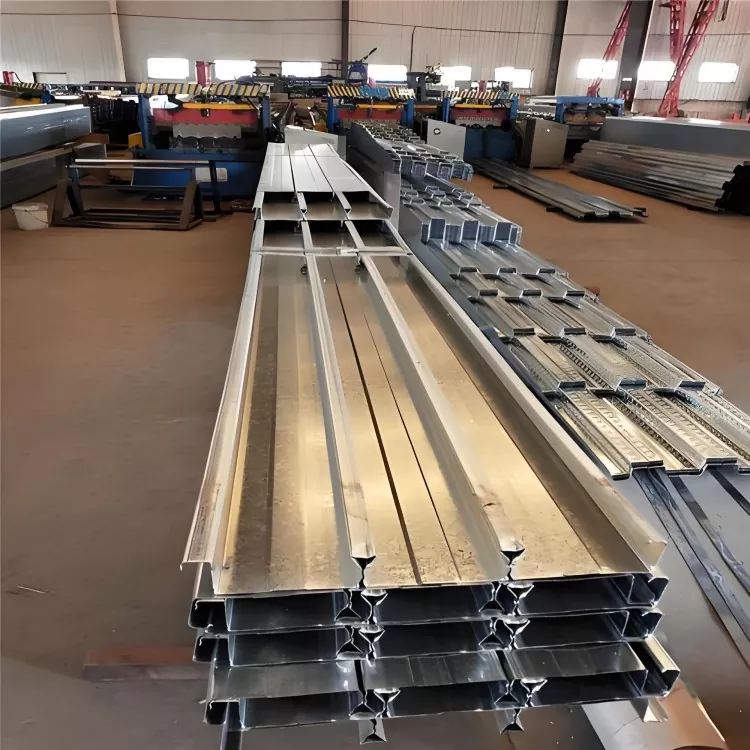
Steel-Bar Truss Floor Decking
Steel-bar trusses are prefabricated in-factory and integrally welded with galvanized profiled steel sheets. Its core difference from conventional profiled-steel floor decking lies in load-bearing division. The former enables its two components to perform respective functions, while the latter realizes the dual purpose of a single material. Steel-bar truss floor decking boasts clear functional division, more reliable performance, and easier quality control. By contrast, conventional profiled-steel floor decking imposes higher requirements on the bonding of each component.
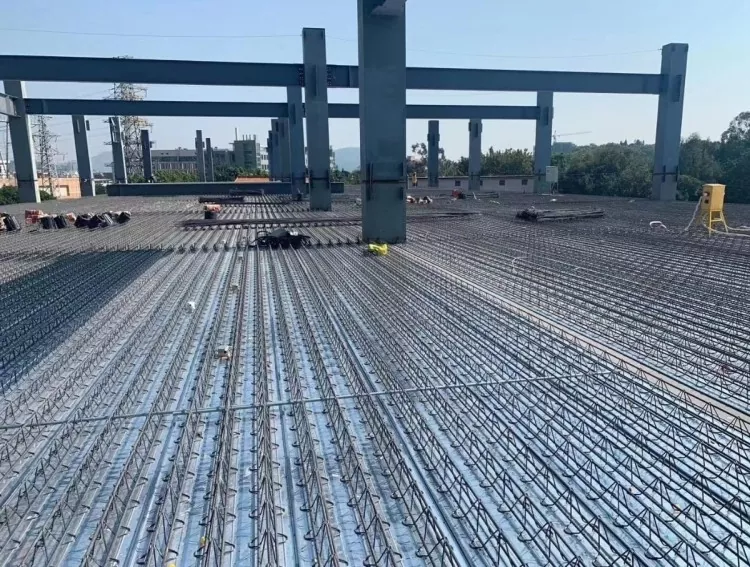
The selection of floor decking essentially involves reasonable consideration among span, load, construction efficiency, and overall cost. Among various types, open-type decking has the lowest cost; re-entrant decking delivers superior fire and corrosion resistance; closed-type decking provides the best comprehensive performance; and steel-bar truss decking features high construction efficiency and favorable quality control.
Related News
- How to Choose C and Z Purlins for Steel Structure Warehouses?
- Which Residential Projects Are Suitable for Modular Shipping Container Homes?
- What Are the Differences Between Prefabricated Container Motel Construction and Traditional Motels?
- What construction costs can be reduced by using steel structure canteen construction?
- What Are the Application Scenarios of Customized Residential Container Warehouse Construction?
- Recommended Roof Slope Values for Portal Frames and Light Steel Roof Structures
Leave me a message
New Products





News Recommendations