English
- English
- Esperanto
- Afrikaans
- Català
- שפה עברית
- Cymraeg
- Galego
- Latviešu
- icelandic
- ייִדיש
- беларускі
- Hrvatski
- Kreyòl ayisyen
- Shqiptar
- Malti
- lugha ya Kiswahili
- አማርኛ
- Bosanski
- Frysk
- ភាសាខ្មែរ
- ქართული
- ગુજરાતી
- Hausa
- Кыргыз тили
- ಕನ್ನಡ
- Corsa
- Kurdî
- മലയാളം
- Maori
- Монгол хэл
- Hmong
- IsiXhosa
- Zulu
- Yoruba
- অসমীয়া
- ଓଡିଆ
- Punjabi
- پښتو
- Chichewa
- Samoa
- Sesotho
- සිංහල
- Gàidhlig
- Cebuano
- Somali
- Тоҷикӣ
- O'zbek
- Hawaiian
- سنڌي
- Shinra
- Հայերեն
- Igbo
- Sundanese
- Lëtzebuergesch
- Malagasy
- Español
- Português
- русский
- Français
- 日本語
- Deutsch
- tiếng Việt
- Italiano
- Nederlands
- ภาษาไทย
- Polski
- 한국어
- Svenska
- magyar
- Malay
- বাংলা ভাষার
- Dansk
- Suomi
- हिन्दी
- Pilipino
- Türkçe
- Gaeilge
- العربية
- Indonesia
- Norsk
- تمل
- český
- ελληνικά
- український
- Javanese
- فارسی
- தமிழ்
- తెలుగు
- नेपाली
- Burmese
- български
- ລາວ
- Latine
- Қазақша
- Euskal
- Azərbaycan
- Slovenský jazyk
- Македонски
- Lietuvos
- Eesti Keel
- Română
- Slovenski
- मराठी
- Srpski језик

Comprehensive Unit Price of Light Steel Structure Factory Buildings and Its Influencing Factors
In the field of industrial construction, light steel structure factory buildings have become the preferred building type for small and medium-sized production workshops, logistics warehouses and simple processing sites by virtue of their advantages including short construction periods, large spans, light self-weight and excellent seismic performance. Their comprehensive unit price is not a mathematical figure estimated arbitrarily, but a cost profile formed by breaking down item by item such factors as engineering conditions, design standards, material selection and construction organization.
Take light steel structure projects with a steel consumption of 25~40kg/m² as an example, the comprehensive unit prices for different steel structure fabrication are roughly as follows:
|
Structure Item |
Comprehensive Unit Price |
|
Steel Frame Beams and Columns |
RMB 840~1097 per ton |
|
Steel Crane Girders |
RMB 856~1120 per ton |
|
Steel Bracings |
RMB 1040~1572 per ton |
|
Steel Tie Rods and Corner Braces |
RMB 1040~1572 per ton |
|
Tension Bars |
RMB 1054~1601 per ton |
|
Steel Structure Erection |
RMB 638~829 per ton |
|
Purlin Installation |
RMB 607~809 per ton |
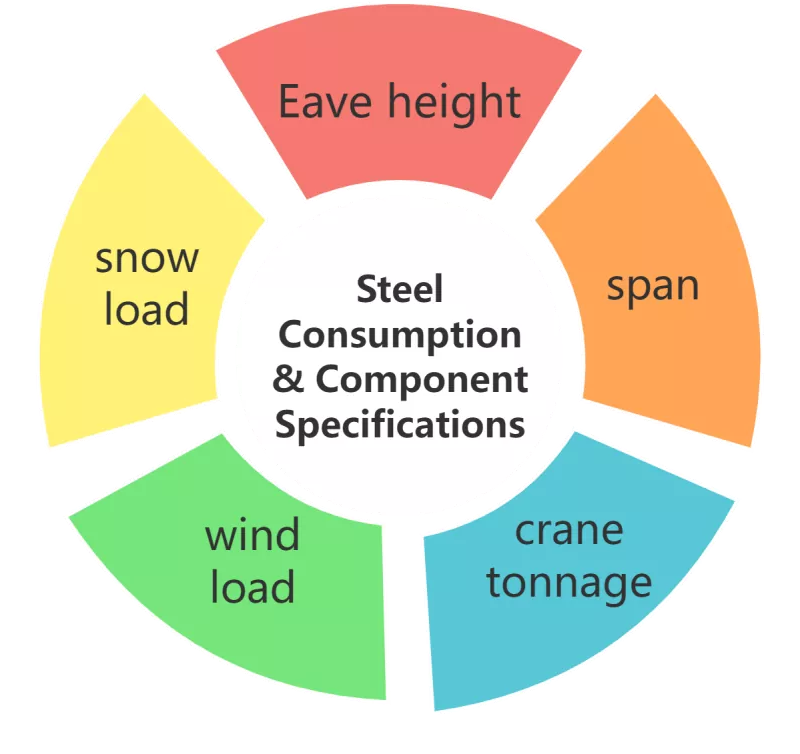
The above are empirical market data of 2025. The actual quotation shall be comprehensively determined based on the labor and machinery cost level of the project location as well as specific engineering requirements. In addition, factors affecting the comprehensive unit price include steel consumption and component specifications, complexity of processing technology, surface treatment grade, transportation distance and erection conditions, order quantity and construction schedule.
Differences in steel consumption and component specifications directly determine the section size of components and plate thickness, thereby affecting material costs and processing difficulty.
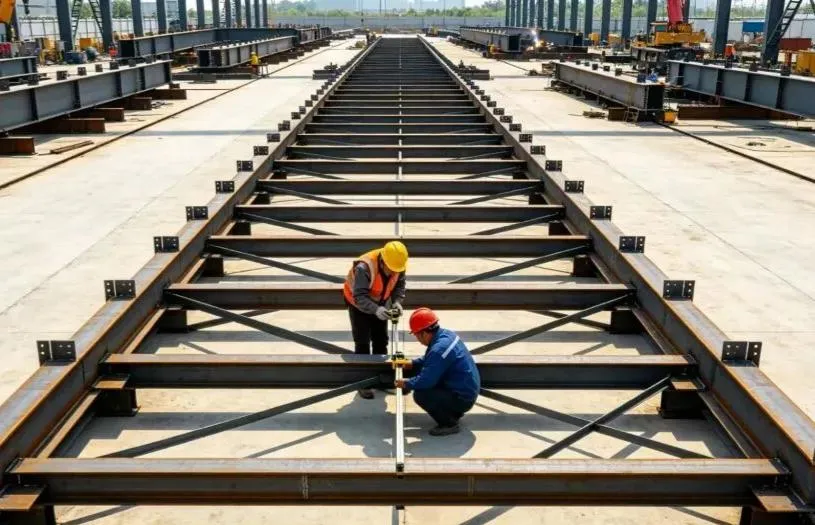
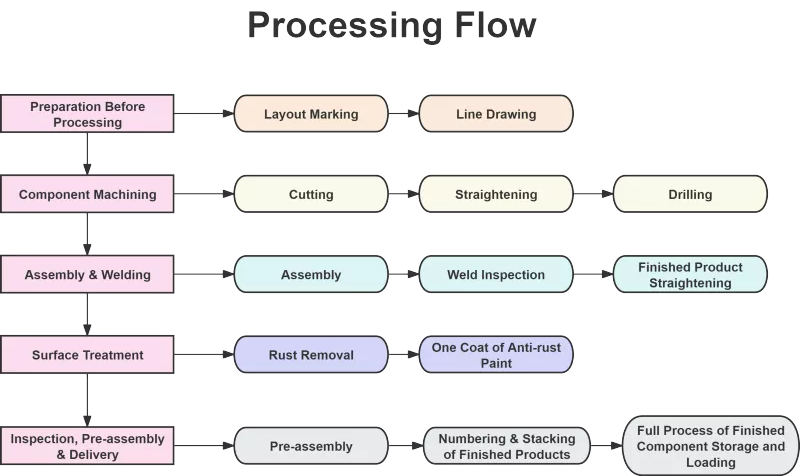
The production and processing of steel structures mainly go through five stages: pre-processing preparation, component machining, assembly and welding, surface treatment, as well as inspection and delivery. Quality control in every link will affect the precision and safety of finished products, and also exert an impact on the comprehensive unit price of the products.
Generally speaking, surface treatment includes shot blasting rust removal and anti-corrosion coating. Shot blasting is classified into Grade Sa2 and Grade Sa2.5. There can be a price difference of hundreds of RMB per ton between ordinary anti-rust paint and heavy-duty anti-corrosion coating systems such as hot-dip galvanizing and epoxy zinc-rich paint.
The impacts of transportation distance, erection conditions, order quantity and construction schedule on costs are obvious. For instance, projects with large order volumes and flexible construction periods can adopt streamlined production, leading to lower amortized costs. In contrast, small-batch or rush orders will drive up unit costs due to mold adjustment, equipment idling and other factors.

Determining the comprehensive unit price of light steel structures for factory buildings is far more than simply applying historical prices. It is a systematic project requiring comprehensive evaluation of multi-dimensional factors including design conditions, technical processes, anti-corrosion and fire protection requirements, as well as on-site construction environments.
When requesting formal quotations, purchasers are advised to submit design drawings, technical specifications and on-site conditions to qualified professional fabricators, who will provide targeted quotation proposals after detailed calculation of engineering quantities and process costs.
Meanwhile, during price comparison, attention should not only be paid to unit prices. More importantly, purchasers shall comprehensively assess the fabricator’s processing capacity, welding technology, quality control system and track record of similar projects, so as to make procurement decisions that balance economic rationality and guaranteed engineering quality.
Related News
- How to Choose C and Z Purlins for Steel Structure Warehouses?
- Which Residential Projects Are Suitable for Modular Shipping Container Homes?
- What Are the Differences Between Prefabricated Container Motel Construction and Traditional Motels?
- What construction costs can be reduced by using steel structure canteen construction?
- What Are the Application Scenarios of Customized Residential Container Warehouse Construction?
- Recommended Roof Slope Values for Portal Frames and Light Steel Roof Structures
Leave me a message
New Products


News Recommendations