English
- English
- Esperanto
- Afrikaans
- Català
- שפה עברית
- Cymraeg
- Galego
- Latviešu
- icelandic
- ייִדיש
- беларускі
- Hrvatski
- Kreyòl ayisyen
- Shqiptar
- Malti
- lugha ya Kiswahili
- አማርኛ
- Bosanski
- Frysk
- ភាសាខ្មែរ
- ქართული
- ગુજરાતી
- Hausa
- Кыргыз тили
- ಕನ್ನಡ
- Corsa
- Kurdî
- മലയാളം
- Maori
- Монгол хэл
- Hmong
- IsiXhosa
- Zulu
- Yoruba
- অসমীয়া
- ଓଡିଆ
- Punjabi
- پښتو
- Chichewa
- Samoa
- Sesotho
- සිංහල
- Gàidhlig
- Cebuano
- Somali
- Тоҷикӣ
- O'zbek
- Hawaiian
- سنڌي
- Shinra
- Հայերեն
- Igbo
- Sundanese
- Lëtzebuergesch
- Malagasy
- Español
- Português
- русский
- Français
- 日本語
- Deutsch
- tiếng Việt
- Italiano
- Nederlands
- ภาษาไทย
- Polski
- 한국어
- Svenska
- magyar
- Malay
- বাংলা ভাষার
- Dansk
- Suomi
- हिन्दी
- Pilipino
- Türkçe
- Gaeilge
- العربية
- Indonesia
- Norsk
- تمل
- český
- ελληνικά
- український
- Javanese
- فارسی
- தமிழ்
- తెలుగు
- नेपाली
- Burmese
- български
- ລາວ
- Latine
- Қазақша
- Euskal
- Azərbaycan
- Slovenský jazyk
- Македонски
- Lietuvos
- Eesti Keel
- Română
- Slovenski
- मराठी
- Srpski језик

Confused About Steel Structure Anti-Corrosion? Standard Options & Selection Guidelines
Steel structure anti-corrosion is crucial to extend the service life of buildings. Corrosion protection schemes vary according to different natural and service environments. Comprehensive evaluation shall be conducted for both surface preparation and anti-corrosion measures to cut initial construction costs and prolong the lifespan of the building.
All types of buildings are subject to the impact of corrosive environments, which are classified into different corrosion categories based on service conditions.
|
Corrosion Category |
Typical Environment |
|
C2 (Low) |
Dry inland areas, unheated warehouses |
|
C3 (Medium) |
Urban industrial zones, general factories |
|
C4 (High) |
Chemical plants, coastal industrial areas |
|
C5 (Very High) |
High-humidity industrial zones, offshore coastal regions |
Different anti-corrosion schemes shall be selected to cope with various corrosive environments. No matter which solution is adopted, surface preparation lays the foundation of corrosion protection and determines whether the protective coating can perform as designed. In general, sandblasting or shot blasting is applied for rust removal of steel structure workshops, with a minimum cleanliness grade of Sa2.5, defined as very thorough blast cleaning. In addition, the original rust grade of steel substrates shall be taken into account. Raw materials that cannot meet the required standard even after surface treatment shall be replaced or discarded.
|
Dimension |
Shot Blasting |
Sandblasting |
Peening Blasting |
|
Working Principle |
Mechanical power method |
Pneumatic power method |
Pneumatic power method |
|
Efficiency |
High |
Relatively low |
Lower than shot blasting |
|
Cost |
High initial investment, low long-term cost |
Low initial cost, high labor cost |
Between shot blasting and sandblasting |
|
Environmental Performance |
Operated in enclosed space |
Prone to massive dust generation |
Better than sandblasting |
|
Flexibility |
Blind spots exist |
Suitable for complex components |
Suitable for small complex components |
|
Application Scenarios |
Workpiece pretreatment |
Finished components |
Surface strengthening, small complex components |
Upon completion of surface preparation, the next step is to select the anti-corrosion system. Spraying painting and hot-dip galvanizing are the two mainstream solutions. Besides, several proven mature anti-corrosion methods are widely adopted in practical projects:
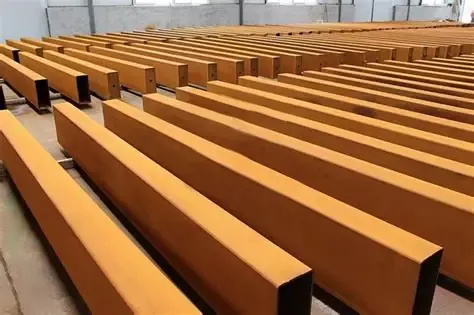
(1) Weathering steel fundamentally addresses corrosion issues, applicable to partial outdoor steel structures, yet with the drawbacks of high cost and poor appearance.
(2) Thermal spraying (aluminum spraying / zinc spraying) delivers performance equivalent to hot-dip galvanizing and features better adaptability to component dimensions, ideal for special steel members and severely corrosive environments.
(3) Cathodic protection relies on electrochemical anti-corrosion principles, mainly applied to steel structures submerged underwater or buried underground. Innovative composite protection systems serve as alternative options beyond conventional solutions, such as integrated anti-corrosion and fire-resistant coatings and graphene heavy-duty anti-corrosion coatings.
Multi-Layer Spray Coating System
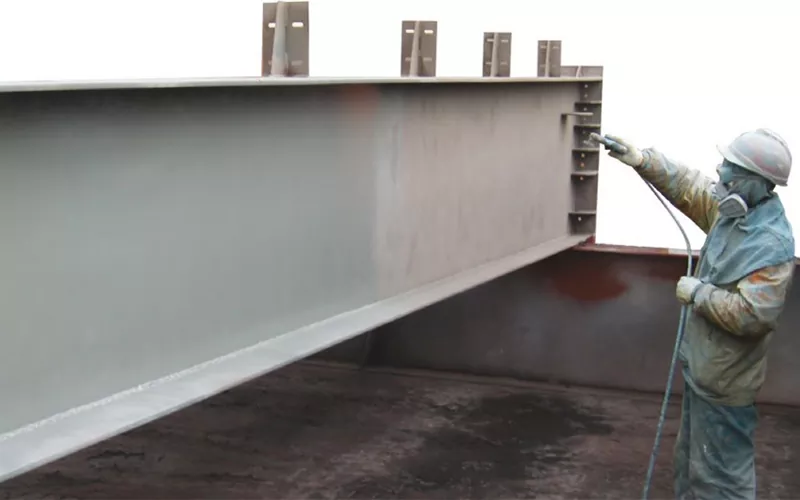
The spray coating anti-corrosion system for steel structures builds multi-layer protective coatings on component surfaces with differentiated functions, which are mainly divided into three layers: primer, intermediate coat and topcoat. The primer serves for adhesion and rust protection. Epoxy zinc-rich primer with zinc content no less than 70% is commonly used. Inorganic zinc-rich primer is an alternative, yet its dry film thickness requires strict control. Epoxy micaceous iron oxide intermediate coat is applied for the intermediate layer, and aliphatic polyurethane topcoat or fluorocarbon topcoat are adopted as the finish coat. All procedures of the spraying system shall be finished in the same factory to ensure stable workmanship and reliable anti-corrosion performance.
Galvanizing
Galvanizing is divided into hot-dip galvanizing and electro-galvanizing (ordinary galvanizing). Hot-dip galvanizing (full name: hot-dip galvanization) forms protective zinc coating by immersing steel into molten zinc bath. It features thick zinc layer ranging from 65μm to 200μm. With outstanding corrosion resistance, long service life, firm adhesion and simple process, it has the disadvantage of mediocre appearance and is suitable for large-scale structural components. Electro-galvanizing deposits zinc coating based on electrolysis principle. Its zinc layer is relatively thin, normally 20μm to 30μm. It boasts good decorative effect yet complicated production process, which is applicable to small precision parts or structures requiring light anti-corrosion protection.
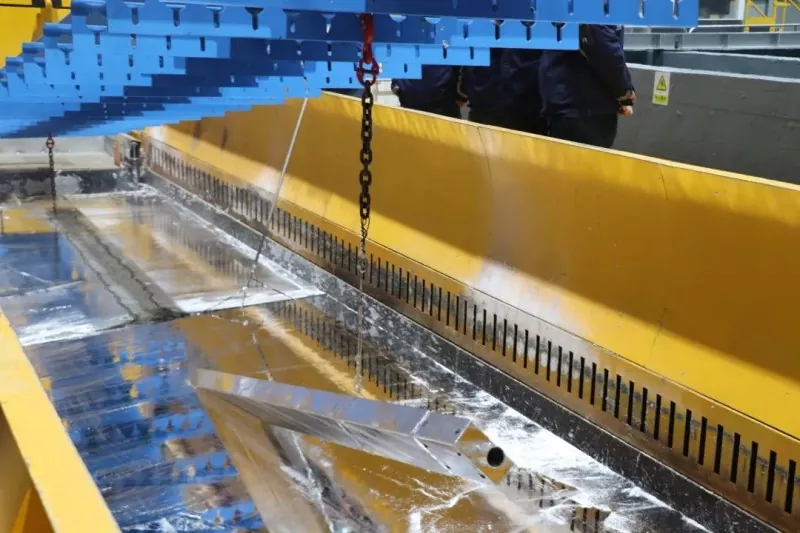
Corrosion protection for steel structure workshops starts with confirming the corrosion category of the operating environment, completing qualified surface preparation and selecting the appropriate anti-corrosion solution. As a professional steel structure manufacturer, EHSS has in-depth mastery of all anti-corrosion processes and can assist you in selecting cost-saving and high-efficiency corrosion protection systems.
Related News
- How to Choose C and Z Purlins for Steel Structure Warehouses?
- Which Residential Projects Are Suitable for Modular Shipping Container Homes?
- What Are the Differences Between Prefabricated Container Motel Construction and Traditional Motels?
- What construction costs can be reduced by using steel structure canteen construction?
- What Are the Application Scenarios of Customized Residential Container Warehouse Construction?
- Recommended Roof Slope Values for Portal Frames and Light Steel Roof Structures
Leave me a message
New Products


News Recommendations