English
- English
- Esperanto
- Afrikaans
- Català
- שפה עברית
- Cymraeg
- Galego
- Latviešu
- icelandic
- ייִדיש
- беларускі
- Hrvatski
- Kreyòl ayisyen
- Shqiptar
- Malti
- lugha ya Kiswahili
- አማርኛ
- Bosanski
- Frysk
- ភាសាខ្មែរ
- ქართული
- ગુજરાતી
- Hausa
- Кыргыз тили
- ಕನ್ನಡ
- Corsa
- Kurdî
- മലയാളം
- Maori
- Монгол хэл
- Hmong
- IsiXhosa
- Zulu
- Yoruba
- অসমীয়া
- ଓଡିଆ
- Punjabi
- پښتو
- Chichewa
- Samoa
- Sesotho
- සිංහල
- Gàidhlig
- Cebuano
- Somali
- Тоҷикӣ
- O'zbek
- Hawaiian
- سنڌي
- Shinra
- Հայերեն
- Igbo
- Sundanese
- Lëtzebuergesch
- Malagasy
- Español
- Português
- русский
- Français
- 日本語
- Deutsch
- tiếng Việt
- Italiano
- Nederlands
- ภาษาไทย
- Polski
- 한국어
- Svenska
- magyar
- Malay
- বাংলা ভাষার
- Dansk
- Suomi
- हिन्दी
- Pilipino
- Türkçe
- Gaeilge
- العربية
- Indonesia
- Norsk
- تمل
- český
- ελληνικά
- український
- Javanese
- فارسی
- தமிழ்
- తెలుగు
- नेपाली
- Burmese
- български
- ລາວ
- Latine
- Қазақша
- Euskal
- Azərbaycan
- Slovenský jazyk
- Македонски
- Lietuvos
- Eesti Keel
- Română
- Slovenski
- मराठी
- Srpski језик

EIHE Steel Structure Attends Provincial Association’s Overseas Risk Roundtable
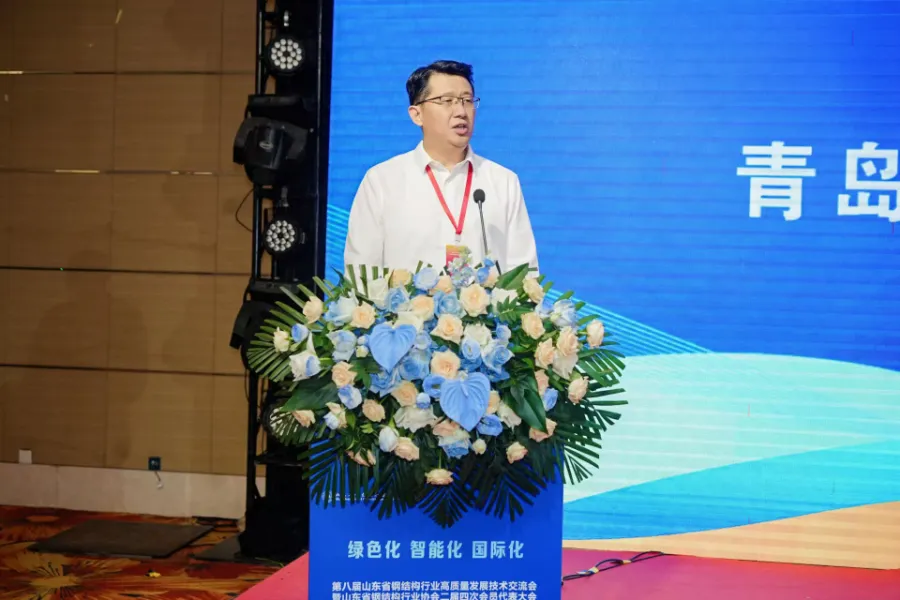
On August 2, the Steel Structure Industry Internationalization Experience Exchange Conference, hosted by the Shandong Steel Structure Industry Association and undertaken by EIHE Steel Structure Group Co., Ltd., held a themed roundtable session on overseas operation risk management, inviting heads of 5 foreign trade enterprises including EIHE Steel Structure. Liu Jiaping, Vice President of the Group and General Manager of the Overseas Business Department, attended the meeting.
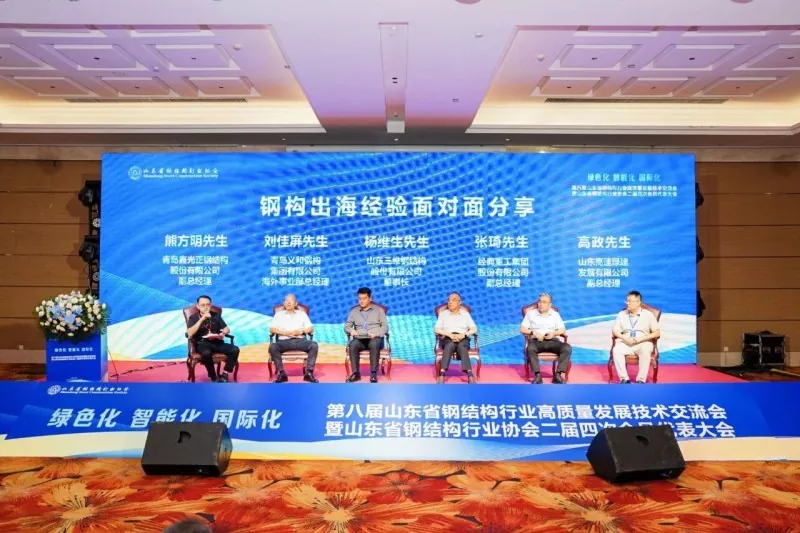
Song Jie, moderator of the roundtable, Supervisor of Shandong Steel Structure Industry Association, and Vice President and Secretary-General of Shandong Overseas Engineering Construction and Development Promotion Association, noted that enterprises face risks at every step of overseas expansion due to wide disparities in industry standards and political and economic conditions across countries, which sets high requirements for enterprises' comprehensive management capabilities. The five invited entrepreneurs are all successful practitioners of overseas expansion in the province's steel structure industry, and he hoped that they would speak freely and share their valuable insights and practical experience.
In his sharing, Liu Jiaping introduced that EIHE Steel Structure has set up branches or offices in Malaysia, Sri Lanka, Egypt, Morocco and other countries, with its main business covering industrial plants, data centers and public buildings. Backed by industry certifications such as EN 1090 (European standard) and AISC (American standard), the company has successively completed and delivered a series of projects including Greenville, Lead New Material flooring, and Pro highway bridge.
Regarding overseas operation risks, Liu Jiaping stated that based on practical overseas construction experience, the company has gradually sorted out and improved the risk management and control system for overseas project installation.
First, workforce management. Enterprises tend to overlook the management of employees during off-duty hours. In some less developed regions with complex environments and poor public security, major personal safety hazards are highly likely to arise. He recommended that employees refrain from going out alone, act in groups uniformly, and purchase sufficient overseas personal accident insurance.
Second, the shortage of local resources. There is insufficient stock of local construction machinery with inflated rental quotations, and shortages of construction tools such as scaffolding, torque wrenches and measuring instruments. Core construction tools should be prioritized for shipment from China along with the goods. Meanwhile, enterprises should connect with large local equipment suppliers in advance and specify the maximum daily rental rate cap in the contract.
Third, overall planning of funds and taxation. Settlement for many overseas projects requires local currency. Some countries impose strict foreign exchange controls, and coupled with sharp exchange rate fluctuations, project profits are difficult to convert into US dollars and remit back to China. In addition, some countries levy withholding tax at source on engineering services, together with multiple taxes such as Sales and Service Tax (SST) and social security tax, which push up project costs and squeeze profit margins. Enterprises should make local tax planning in advance, strictly control the scale of project advance funding, and strive for US dollar settlement as much as possible to reduce financial risks.
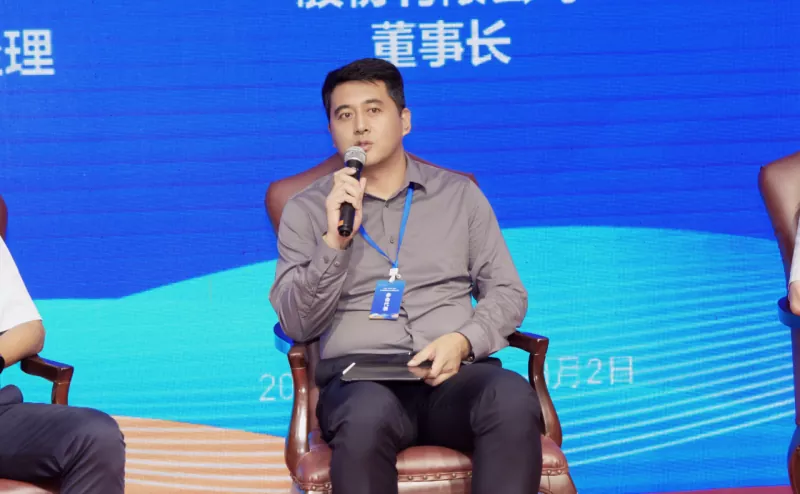
At the meeting, Xiong Fangming, Deputy General Manager of Qingdao Xinguangzheng Steel Structure Co., Ltd., shared experience focusing on the maintenance of overseas customer groups. Gao Zheng, Deputy General Manager of Shandong Expressway Green Building Development Co., Ltd., highlighted risks from the perspectives of commercial exchange rates, production quality and international standards. Zhang Qi, Deputy General Manager of Jingdian Heavy Industry Group Co., Ltd., shared real cases of hidden costs in manufacturing links and quality compensation. Yang Weisheng, Chairman of Shandong Sanwei Steel Structure Co., Ltd., introduced the clear positioning of enterprises going global and ideas for the sound development of the industry.
The moderator Song Jie stated that the five guests, combining real overseas project cases, fully shared practical experience and lessons learned from multiple dimensions including regional culture, international technical standards, full-process quality control, commercial contract terms, exchange rate fluctuations and geopolitical policies, which is of great reference value for Shandong steel structure enterprises planning to go global or currently developing overseas business.
He proposed that steel structure enterprises in the province should, relying on the platform of Shandong Steel Structure Industry Association, strengthen exchanges and docking, share industry resources, and jointly explore overseas markets. They should give full play to their advantages in respective market segments to jointly promote the high-quality international development of Shandong's steel structure industry.
Related News
- Australian Clients Visit EIHE Steel Structure
- Pharmaceutical Manufacturing: Eihe Classic Project Case – AstraZeneca
- Eihe Steel Structure Participated in the Construction of Smart Logistics Park – Weihai Project Showcase
- The First Fully Steel-Structured Prefabricated High-rise Building in Jimo District — Yinwente
- Qingdao’s Most Advanced "Cradle of Sharpshooters"
- Steel Structure Practice for Northern Shaanxi Aviation Hub
Leave me a message
New Products

News Recommendations