English
- English
- Esperanto
- Afrikaans
- Català
- שפה עברית
- Cymraeg
- Galego
- Latviešu
- icelandic
- ייִדיש
- беларускі
- Hrvatski
- Kreyòl ayisyen
- Shqiptar
- Malti
- lugha ya Kiswahili
- አማርኛ
- Bosanski
- Frysk
- ភាសាខ្មែរ
- ქართული
- ગુજરાતી
- Hausa
- Кыргыз тили
- ಕನ್ನಡ
- Corsa
- Kurdî
- മലയാളം
- Maori
- Монгол хэл
- Hmong
- IsiXhosa
- Zulu
- Yoruba
- অসমীয়া
- ଓଡିଆ
- Punjabi
- پښتو
- Chichewa
- Samoa
- Sesotho
- සිංහල
- Gàidhlig
- Cebuano
- Somali
- Тоҷикӣ
- O'zbek
- Hawaiian
- سنڌي
- Shinra
- Հայերեն
- Igbo
- Sundanese
- Lëtzebuergesch
- Malagasy
- Español
- Português
- русский
- Français
- 日本語
- Deutsch
- tiếng Việt
- Italiano
- Nederlands
- ภาษาไทย
- Polski
- 한국어
- Svenska
- magyar
- Malay
- বাংলা ভাষার
- Dansk
- Suomi
- हिन्दी
- Pilipino
- Türkçe
- Gaeilge
- العربية
- Indonesia
- Norsk
- تمل
- český
- ελληνικά
- український
- Javanese
- فارسی
- தமிழ்
- తెలుగు
- नेपाली
- Burmese
- български
- ລາວ
- Latine
- Қазақша
- Euskal
- Azərbaycan
- Slovenský jazyk
- Македонски
- Lietuvos
- Eesti Keel
- Română
- Slovenski
- मराठी
- Srpski језик

Braced Steel Frame System: Why High-Rise Buildings Stand Firm?
Driven by the scarcity of modern land resources and pressures from population growth, vertical construction has become an inevitable trend in contemporary architecture. Modern skyscrapers soar high into the sky and stand towering. What keeps them relatively stable against strong wind pressure in the troposphere and enables them to withstand earthquakes safely? To answer this question, let’s take a closer look at the braced steel frame system.
Traditional pure frame structures feature flexible floor layouts and high space utilization. However, once the building height exceeds a certain limit, their shortcoming of insufficient lateral structural stiffness will emerge. There are two primary solutions to address this issue: enlarging the cross-sections of beams and columns, or installing bracing systems. The former will lead to a sharp rise in steel consumption, while the latter boasts superior cost-effectiveness. Therefore, braced steel frame systems are the optimal choice for high-rise buildings.
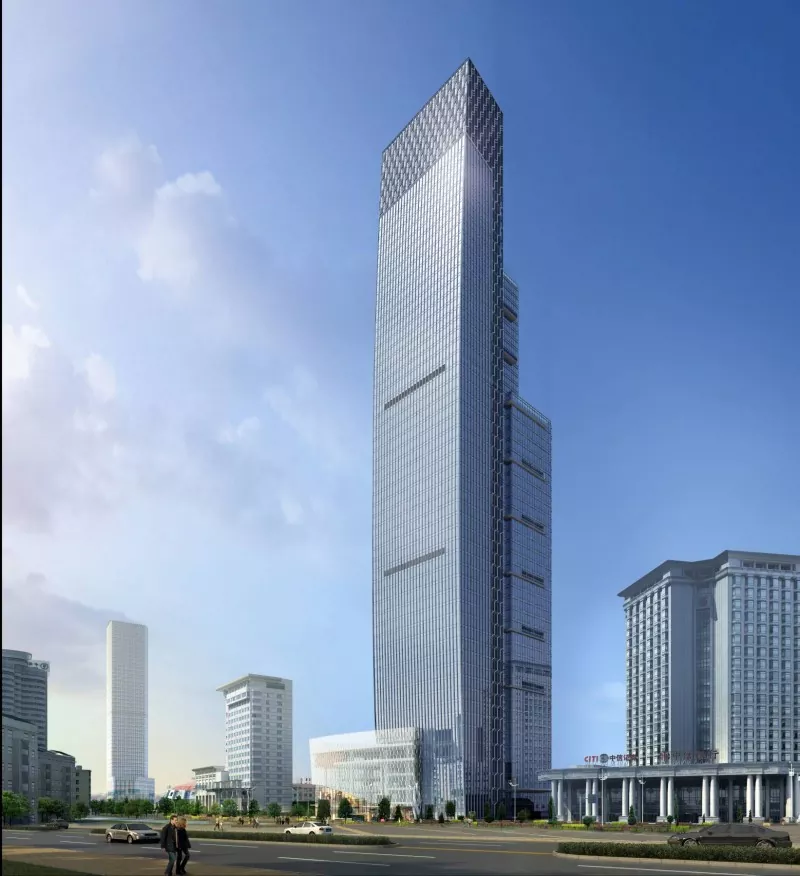
The fundamental logic of the braced steel frame system lies in the rational arrangement of bracing members to form a collaborative load-bearing mechanism: the steel frame bears vertical loads while the braces resist horizontal forces. An office building in Xiamen adopts a steel frame-concentric brace structural system. Load-bearing buckling-restrained braces (BRBs) are installed at the base of the building, which fully leverages the ductility advantages of steel structures and greatly improves the seismic performance of the structure.

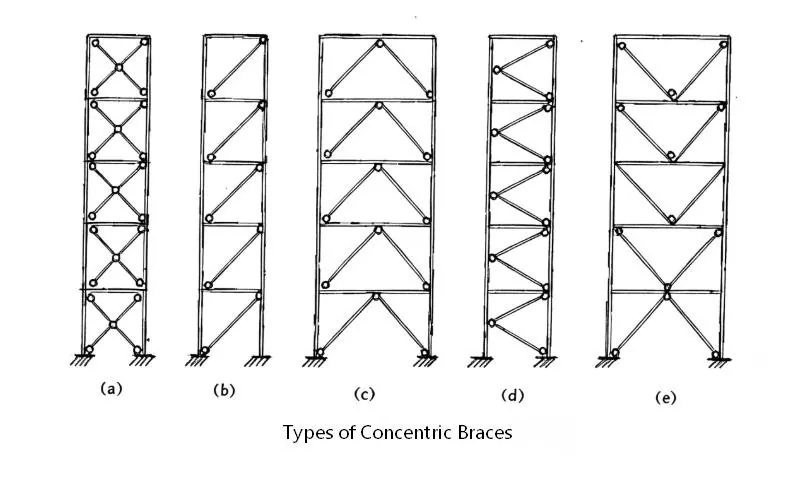
There are three primary mainstream types of braced steel frame systems. The Concentrically Braced Frame (CBF) is the most classic bracing configuration, whose core characteristic is that the centroidal axes of bracing members intersect at the center of beam-column joints. It possesses high stiffness and can effectively control horizontal displacement. The distinction of Eccentrically Braced Frame (EBF) from CBF lies in the offset of its bracing axes, which enables it to combine the high stiffness of concentric braces and the ductility merit of pure frames. Energy-dissipating braced frames rely on energy dissipation and damping devices to form an ideal lateral force-resisting system.
In practical engineering, Buckling-Restrained Brace (BRB) is the prevailing solution and an upgraded variant of concentrically braced frames. It eliminates the buckling failure issue of traditional concentric braces under compression and bending. Composed of a core steel plate, outer restraining tube and unbonded filler material, BRBs yield under load without buckling to dissipate energy, achieving equal tensile and compressive bearing capacity as well as plump hysteretic performance.
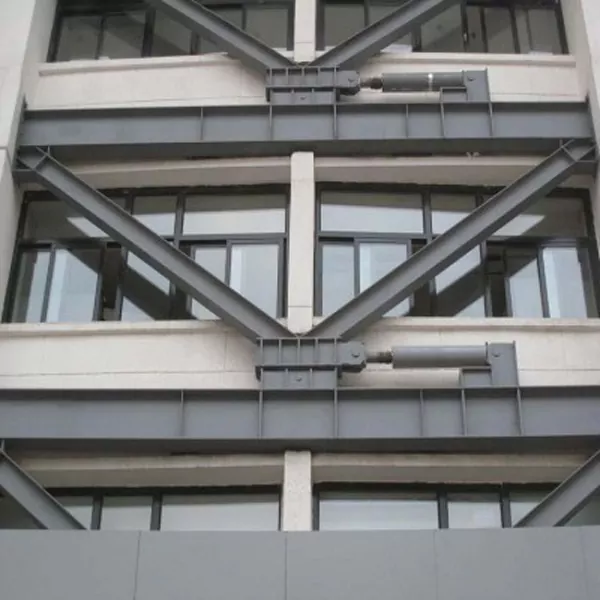
Besides, CBF mainly includes Diagonal Bracing, Chevron Bracing (Inverted V-Bracing), V-Bracing, X-Bracing (Cross Bracing) and K-Bracing. EBF primarily consists of D-type (gate-type), K-type, V-type and Y-type bracings.
The specific form of braced steel frame systems shall be selected based on the seismic requirements and height of the building. Generally speaking, traditional concentric braces feature low cost and high stiffness, eccentric braces offer favorable ductility and strong energy dissipation capacity, and buckling-restrained braces deliver superior seismic performance. Braced steel frame systems enable high-rise and super high-rise buildings to resist strong winds and earthquakes, and also provide reliable structural solutions for vertical urban development. With 21 years of extensive experience, EHSS is a professional manufacturer specializing in the fabrication and installation of steel structural components. Stay tuned to EHSS for more professional technical information about steel structures.
Related News
- How to Choose C and Z Purlins for Steel Structure Warehouses?
- Which Residential Projects Are Suitable for Modular Shipping Container Homes?
- What Are the Differences Between Prefabricated Container Motel Construction and Traditional Motels?
- What construction costs can be reduced by using steel structure canteen construction?
- What Are the Application Scenarios of Customized Residential Container Warehouse Construction?
- Recommended Roof Slope Values for Portal Frames and Light Steel Roof Structures
Leave me a message
New Products


News Recommendations