English
- English
- Esperanto
- Afrikaans
- Català
- שפה עברית
- Cymraeg
- Galego
- Latviešu
- icelandic
- ייִדיש
- беларускі
- Hrvatski
- Kreyòl ayisyen
- Shqiptar
- Malti
- lugha ya Kiswahili
- አማርኛ
- Bosanski
- Frysk
- ភាសាខ្មែរ
- ქართული
- ગુજરાતી
- Hausa
- Кыргыз тили
- ಕನ್ನಡ
- Corsa
- Kurdî
- മലയാളം
- Maori
- Монгол хэл
- Hmong
- IsiXhosa
- Zulu
- Yoruba
- অসমীয়া
- ଓଡିଆ
- Punjabi
- پښتو
- Chichewa
- Samoa
- Sesotho
- සිංහල
- Gàidhlig
- Cebuano
- Somali
- Тоҷикӣ
- O'zbek
- Hawaiian
- سنڌي
- Shinra
- Հայերեն
- Igbo
- Sundanese
- Lëtzebuergesch
- Malagasy
- Español
- Português
- русский
- Français
- 日本語
- Deutsch
- tiếng Việt
- Italiano
- Nederlands
- ภาษาไทย
- Polski
- 한국어
- Svenska
- magyar
- Malay
- বাংলা ভাষার
- Dansk
- Suomi
- हिन्दी
- Pilipino
- Türkçe
- Gaeilge
- العربية
- Indonesia
- Norsk
- تمل
- český
- ελληνικά
- український
- Javanese
- فارسی
- தமிழ்
- తెలుగు
- नेपाली
- Burmese
- български
- ລາວ
- Latine
- Қазақша
- Euskal
- Azərbaycan
- Slovenský jazyk
- Македонски
- Lietuvos
- Eesti Keel
- Română
- Slovenski
- मराठी
- Srpski језик

Transformation of the Steel Structure Industry
The steel structure industry stands at an unprecedented crossroads of transformation. Its predicament stems not from insufficient technology, but from cognitive bias: the sector has long equated steel structures with mere material processing and assembly, ignoring their core value as an independent product system. This cognitive dislocation has trapped the industry in low‑end competition based on tonnage pricing, squeezing profit margins to the extreme and hindering high‑quality development.
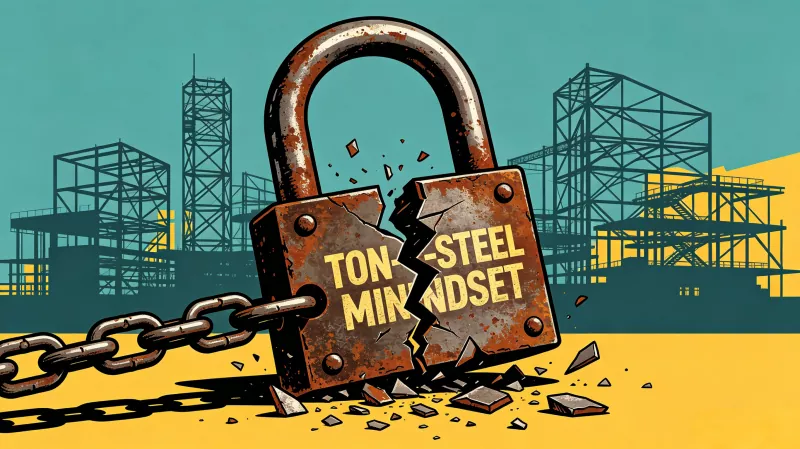
The "ton‑steel mindset" is the core shackle restricting industrial upgrading. It reduces complex building structures to a mere accumulation of steel consumption, completely ignoring the inherent value of steel structures as a systematic engineering system. Moreover, the bill‑of‑quantity pricing model has become an institutional barrier stifling industrial value creation: no matter whether enterprises upgrade welding precision to Class‑I flaw‑detection standards or control component deformation within the millimeter level, all added value brought by process improvement and precision enhancement will be ruthlessly eliminated as long as settlement is still based on steel tonnage. In fact, the product‑oriented transformation of steel structures is by no means a simple extension of services, but a fundamental restructuring of business logic. It requires all‑round innovation of enterprises from strategic positioning and organizational structure to operation modes, so as to completely break away from the stereotyped thinking of being a "processor".
The inherent myth that "buildings are inherently unique" further locks the industry in a vicious cycle of low efficiency and high costs. Non‑standard design and customized production are widely regarded as unshakable golden rules, turning every project into a "one‑off product" — components cannot be reused, production lines fail to achieve scale effects, resulting in low production efficiency and persistently high costs. In conventional design, a single steel column is often required to be "multi‑functional": bearing vertical loads, resisting horizontal bending moments, and dissipating seismic energy during earthquakes. This mechanically‑coupled design concept directly leads to non‑standard cross‑sections, complex joints, and inconsistent connection processes. In fact, steel structures can fully realize functional decoupling by separating core functions such as load‑bearing, energy dissipation and stability, allowing different components to perform their respective roles and break free from complex mechanical constraints, thus enabling standardized production and large‑scale replication. This requires the whole industry to break the mental shackles of the "building particularism", proactively learn product‑oriented thinking and standardized methodologies from the manufacturing sector, and restructure production logic.
In the value distribution of the industrial chain, the steel structure industry has long remained at the bottom, playing a passive role of "processing according to drawings". It can neither participate in early‑stage design decisions nor influence the final definition of products, and such a passive positioning dooms the industry to low‑profit margins. Under the traditional business model, enterprises only start drawing, material preparation and construction after obtaining formal contracts. This seemingly prudent practice actually isolates enterprises from core value‑creating links, leaving them with only meager processing profits.
To break free from the low‑profit trap, steel structure enterprises must take proactive steps forward, develop forward‑looking product‑definition capabilities, get involved in project design at an early stage, and seize the initiative in value creation. Meanwhile, a "steel structure star‑rating certification system" should be established. Authoritative third‑party assessments can endorse high‑quality products and reduce market identification costs. Only when a market mechanism of "premium price for premium quality" takes shape can leading enterprises gain sufficient returns on innovation and continuously drive industrial upgrading.
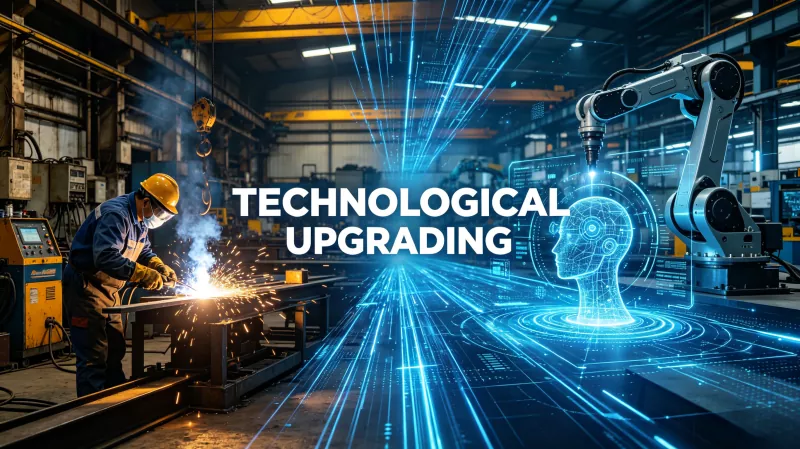
Technological upgrading serves as a vital pillar for transformation. In traditional steel structure production, core processes such as welding, cutting and spraying rely heavily on the experience and manual skills of veteran workers, resulting in significant quality fluctuations and difficulties in standardized replication. With the popularization of automated technologies including welding robots and vision‑guided intelligent cutting equipment, human experience is being transformed into a replicable and iterable digital process library. Virtual simulation technology can rapidly verify the feasibility of new product designs, while digital twin technology can predict potential problems in manufacturing and installation in advance, enabling enterprises to complete product iteration at lower costs and higher efficiency. When digitalization is deeply integrated into enterprises’ innovation DNA, product R&D cycles will be shortened from months to weeks, empowering steel structure manufacturers to truly compete head‑on with manufacturing giants.
Slowing growth in the domestic market has prompted an increasing number of steel‑structure enterprises to turn their attention overseas. However, without fundamental innovation in business models, overseas expansion will merely become an extension of cut‑throat domestic competition, failing to build genuine global competitiveness. For the internationalization of the steel‑structure industry, enterprises must shift from price wars to value wars, building core competitiveness through the export of technical standards and product systems. It is necessary to break the limitations of overseas expansion driven by “project‑oriented thinking” and adopt a product‑based internationalization strategy, directly launching standardized steel‑structure product systems validated in the domestic market onto the global stage.
Furthermore, the advanced form of industrial internationalization lies in the export of technical standards, promoting Chinese steel‑structure standards to become globally recognized industry benchmarks. Meanwhile, collective action across the industry is critical. Only by abandoning vicious competition, embracing the “co‑opetition” mindset, and pooling industrial strengths can Chinese steel‑structure enterprises seize the initiative in the global market.
At present, the steel structure industry is at a historical turning point. This transformation is not a partial technological upgrade, but an all‑round innovation covering value concepts, thinking modes, technical systems and business models. No external force can save the industry. Only we ourselves, who dare to break inherent rules and take the initiative to change, can break through the predicament and lead the industry to make a breakthrough.
Previous :
Related News
- How to Choose C and Z Purlins for Steel Structure Warehouses?
- Which Residential Projects Are Suitable for Modular Shipping Container Homes?
- What Are the Differences Between Prefabricated Container Motel Construction and Traditional Motels?
- What construction costs can be reduced by using steel structure canteen construction?
- What Are the Application Scenarios of Customized Residential Container Warehouse Construction?
- Recommended Roof Slope Values for Portal Frames and Light Steel Roof Structures
Leave me a message



News Recommendations