English
- English
- Esperanto
- Afrikaans
- Català
- שפה עברית
- Cymraeg
- Galego
- Latviešu
- icelandic
- ייִדיש
- беларускі
- Hrvatski
- Kreyòl ayisyen
- Shqiptar
- Malti
- lugha ya Kiswahili
- አማርኛ
- Bosanski
- Frysk
- ភាសាខ្មែរ
- ქართული
- ગુજરાતી
- Hausa
- Кыргыз тили
- ಕನ್ನಡ
- Corsa
- Kurdî
- മലയാളം
- Maori
- Монгол хэл
- Hmong
- IsiXhosa
- Zulu
- Yoruba
- অসমীয়া
- ଓଡିଆ
- Punjabi
- پښتو
- Chichewa
- Samoa
- Sesotho
- සිංහල
- Gàidhlig
- Cebuano
- Somali
- Тоҷикӣ
- O'zbek
- Hawaiian
- سنڌي
- Shinra
- Հայերեն
- Igbo
- Sundanese
- Lëtzebuergesch
- Malagasy
- Español
- Português
- русский
- Français
- 日本語
- Deutsch
- tiếng Việt
- Italiano
- Nederlands
- ภาษาไทย
- Polski
- 한국어
- Svenska
- magyar
- Malay
- বাংলা ভাষার
- Dansk
- Suomi
- हिन्दी
- Pilipino
- Türkçe
- Gaeilge
- العربية
- Indonesia
- Norsk
- تمل
- český
- ελληνικά
- український
- Javanese
- فارسی
- தமிழ்
- తెలుగు
- नेपाली
- Burmese
- български
- ລາວ
- Latine
- Қазақша
- Euskal
- Azərbaycan
- Slovenský jazyk
- Македонски
- Lietuvos
- Eesti Keel
- Română
- Slovenski
- मराठी
- Srpski језик

Get to Know Steel Structure: Analysis of Warehouse Steel Structure
Steel warehouses are a common option for modern industrial and logistics facilities. The extensive application of steel structures in warehousing stems mainly from steel’s high strength, as well as outstanding construction efficiency and cost advantages enabled by prefabricated fabrication.
Classification of Warehouses and Advantages of Steel Structures
Compared with conventional concrete warehouses, steel structure warehouses feature lower costs, faster construction and superior flexibility. Specifically, steel structures maximize space utilization to facilitate shelf arrangement and equipment operation; they deliver a quick return on investment and can be put into service rapidly with excellent overall economic benefits and optimized full-life-cycle costs. In addition, steel materials are eco-friendly and consistent with sustainable development concepts, while steel buildings boast high structural safety with prominent merits in seismic zones.
|
Comparison Item |
Steel Structure Warehouse |
Traditional Concrete Warehouse |
|
Space Utilization |
Large-span design with interior column-free space |
Dense column grid and limited span range |
|
Construction Mode |
Prefabricated in factory plus fast on-site assembly |
Cast-in-place construction followed by lengthy curing period |
|
Overall Cost |
Low foundation and labor cost, easy routine maintenance |
Strict foundation requirements leading to high overall expenditure |
|
Environmental & Sustainability |
Classified as green building material |
Generates massive non-recyclable construction waste |
|
Seismic Performance |
Excellent ductility and toughness of steel effectively absorb seismic energy |
Brittle concrete with relatively poor seismic resistance |
Composition of Steel Structure Warehouse
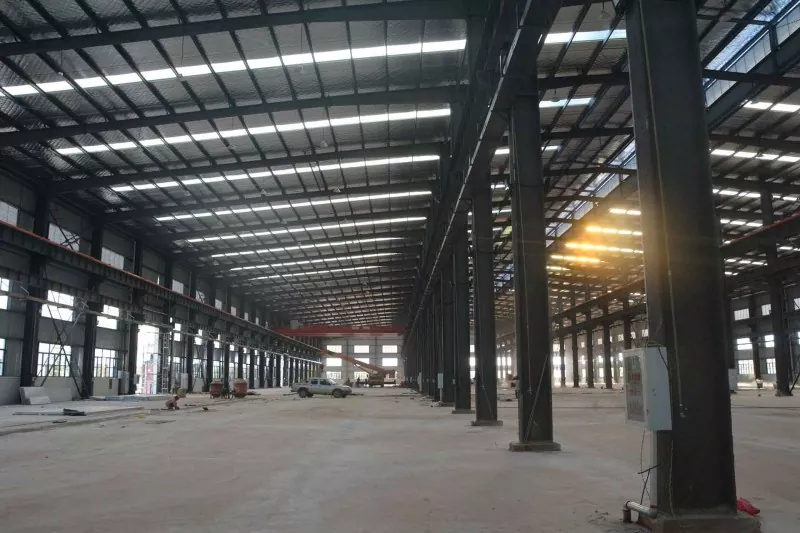
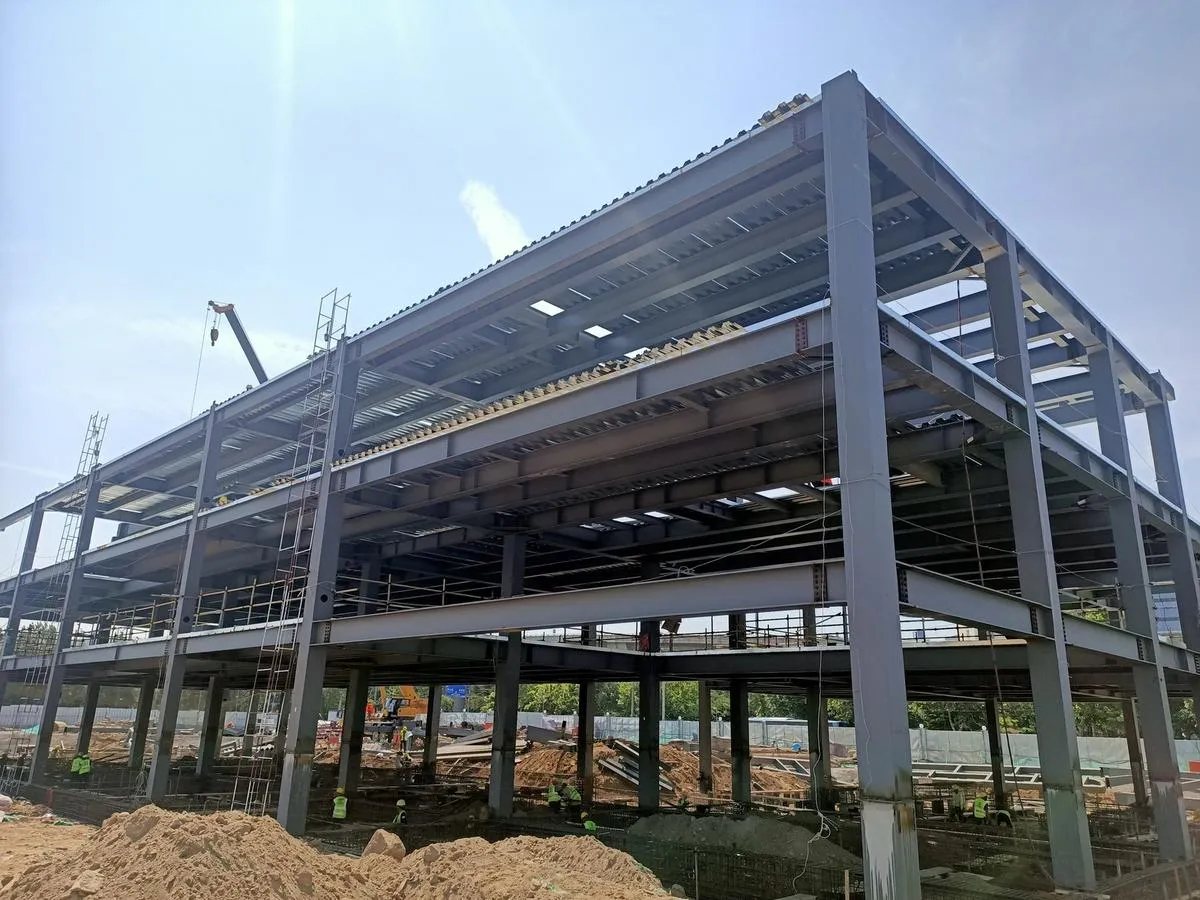
A complete steel structure warehouse consists of multiple functional components, analogous to the skeleton and soft tissues of the human body. It is mainly composed of the main structural system, secondary structural system, auxiliary facility system and internal functional system.
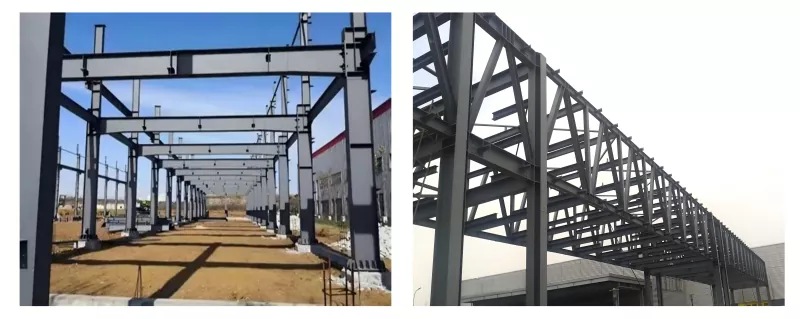
Serving as the skeleton of the warehouse, the main structural system bears core loads to guarantee building stability. Its primary steel components include steel columns, steel beams and trusses. These members sustain all loads from roof, wall, wind, snow, stored goods and equipment, and transfer such loads down to the foundation.
|
Main Components |
Functions |
|
Steel Column |
Vertically transfer loads |
|
Steel Beam |
Horizontally transfer loads |
|
Truss |
Distribute loads to supports |
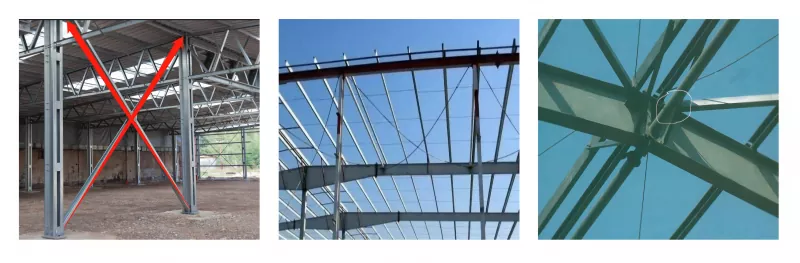
The secondary structural system acts as the ligaments and muscles of a steel warehouse. It mainly resists lateral loads such as wind and seismic forces to prevent structural deflection and secure overall stability. In short, it reinforces the primary structure. Its key components include inter-column bracings, roof horizontal bracings and tie rods, which are stability members without vertical load-bearing functions.
|
Main Components |
Function |
|
Inter-column Bracing |
Resist lateral loads |
|
Roof Horizontal Bracing |
Transfer lateral loads |
|
Tie Rod |
Assist in frame stabilization |
The enclosure system is the skin and outer enclosure of the warehouse, consisting mainly of wall panels, roof panels, thermal insulation layers, doors and windows. Serving as waterproof, thermal and sound insulation barriers, these components protect the interior against wind, rain, scorching sun and cold to stabilize indoor conditions.
|
Main Components |
Materials |
Functions |
|
Roof & Wall Panels |
Single profiled color steel sheet |
Standard application, wind and rain resistance |
|
Color steel sandwich panel |
Thermal insulation |
|
|
Insulation Layer |
Rock wool sandwich core |
Heat preservation and fire retardation |
|
PU polyurethane sandwich core |
Lightweight with thermal insulation performance |
|
|
Fiberglass wool |
Insulation filling matched with single-layer steel sheet |
|
|
Doors |
Color steel sliding door |
For medium and small-sized warehouses |
|
Industrial overhead door |
Large storage warehouses for forklift access |
|
|
Roller shutter door |
Space-saving with easy opening and closing |
|
|
Daylighting Window |
FRP daylighting panel |
Natural daylighting, waterproof and light transmitting |
|
Plastic-steel window |
Ventilation and daylighting |
|
|
Color steel plastic-steel composite window |
Robust, durable with good lighting and sealing performance |
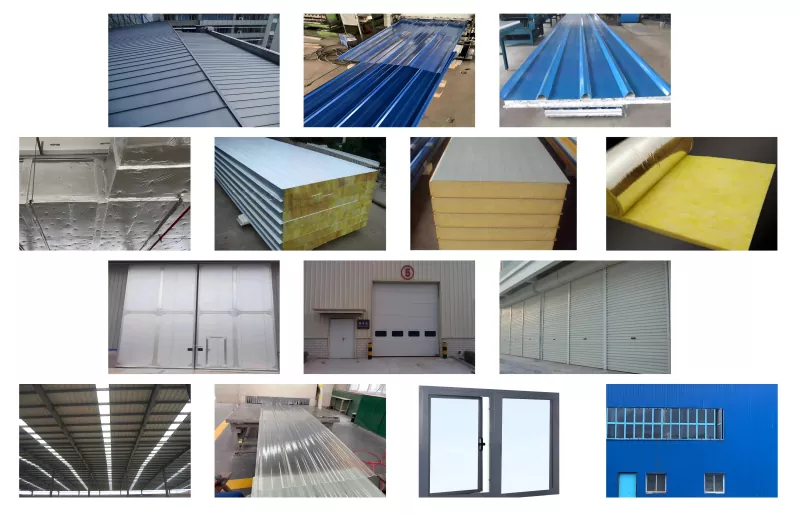
The auxiliary facility system serves as the functional organs of a steel warehouse, consisting of dedicated facilities to satisfy warehousing operations. Key components include ventilation domes or ventilated ridge ventilators, canopies and roof gutters. They ensure smooth logistics circulation, supply natural ventilation and daylight, and enable organized roof drainage.
|
Main Components |
Functions |
|
Ventilator Dome |
Passive natural exhaust ventilation |
|
Ridge Ventilator |
Large-area air exchange and smoke exhaust |
|
Canopy |
Rainproof and sunshade at gateways |
|
Roof Gutter |
Collect roof rainwater and divert water to downpipes |
|
Parapet |
Decorative finish and auxiliary waterproof closure for gutters |
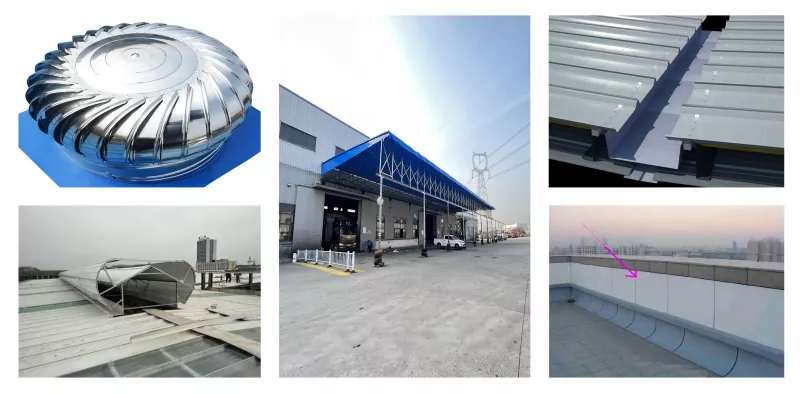
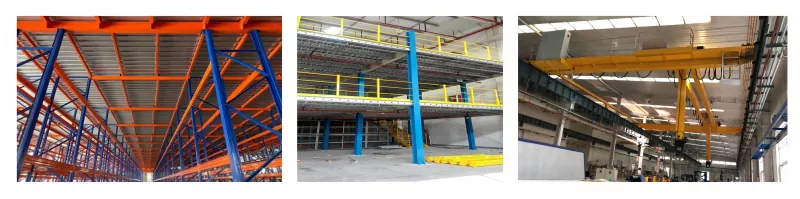
The internal functional system acts as the core functional carrier of the warehouse and determines its storage capacity. Its main components include steel racking, mezzanine platforms and hoisting equipment, which are directly used for goods sorting, storage and handling. In addition, in the integrated rack-building structure, storage racks themselves serve as the building’s supporting structure.
Steel warehouses have become the mainstream construction type for modern warehousing and logistics thanks to core strengths including large-span space, efficient construction, controllable costs, excellent seismic resistance and environmental friendliness. A complete steel warehouse consists of five coordinated functional modules that perform respective duties and work as an integrated whole. Benefiting from these merits and functional advantages, steel structures well satisfy the demand for high-efficiency, standardized and flexible modern logistics, emerging as the optimal structural solution with outstanding cost performance and practicality for industrial warehousing.
Related News
- How to Choose C and Z Purlins for Steel Structure Warehouses?
- Which Residential Projects Are Suitable for Modular Shipping Container Homes?
- What Are the Differences Between Prefabricated Container Motel Construction and Traditional Motels?
- What construction costs can be reduced by using steel structure canteen construction?
- What Are the Application Scenarios of Customized Residential Container Warehouse Construction?
- Recommended Roof Slope Values for Portal Frames and Light Steel Roof Structures
Leave me a message



News Recommendations