English
- English
- Esperanto
- Afrikaans
- Català
- שפה עברית
- Cymraeg
- Galego
- Latviešu
- icelandic
- ייִדיש
- беларускі
- Hrvatski
- Kreyòl ayisyen
- Shqiptar
- Malti
- lugha ya Kiswahili
- አማርኛ
- Bosanski
- Frysk
- ភាសាខ្មែរ
- ქართული
- ગુજરાતી
- Hausa
- Кыргыз тили
- ಕನ್ನಡ
- Corsa
- Kurdî
- മലയാളം
- Maori
- Монгол хэл
- Hmong
- IsiXhosa
- Zulu
- Yoruba
- অসমীয়া
- ଓଡିଆ
- Punjabi
- پښتو
- Chichewa
- Samoa
- Sesotho
- සිංහල
- Gàidhlig
- Cebuano
- Somali
- Тоҷикӣ
- O'zbek
- Hawaiian
- سنڌي
- Shinra
- Հայերեն
- Igbo
- Sundanese
- Lëtzebuergesch
- Malagasy
- Español
- Português
- русский
- Français
- 日本語
- Deutsch
- tiếng Việt
- Italiano
- Nederlands
- ภาษาไทย
- Polski
- 한국어
- Svenska
- magyar
- Malay
- বাংলা ভাষার
- Dansk
- Suomi
- हिन्दी
- Pilipino
- Türkçe
- Gaeilge
- العربية
- Indonesia
- Norsk
- تمل
- český
- ελληνικά
- український
- Javanese
- فارسی
- தமிழ்
- తెలుగు
- नेपाली
- Burmese
- български
- ລາວ
- Latine
- Қазақша
- Euskal
- Azərbaycan
- Slovenský jazyk
- Македонски
- Lietuvos
- Eesti Keel
- Română
- Slovenski
- मराठी
- Srpski језик

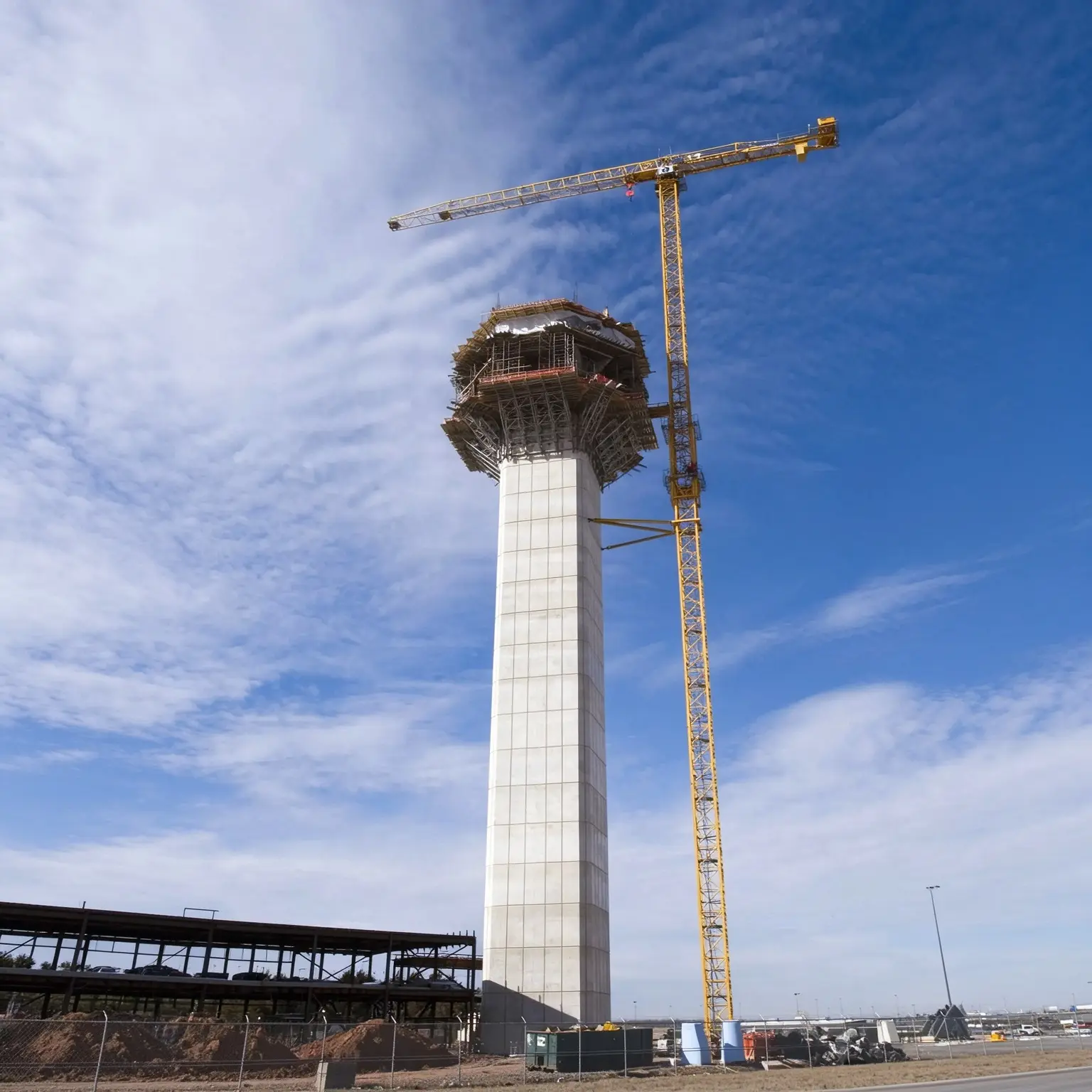
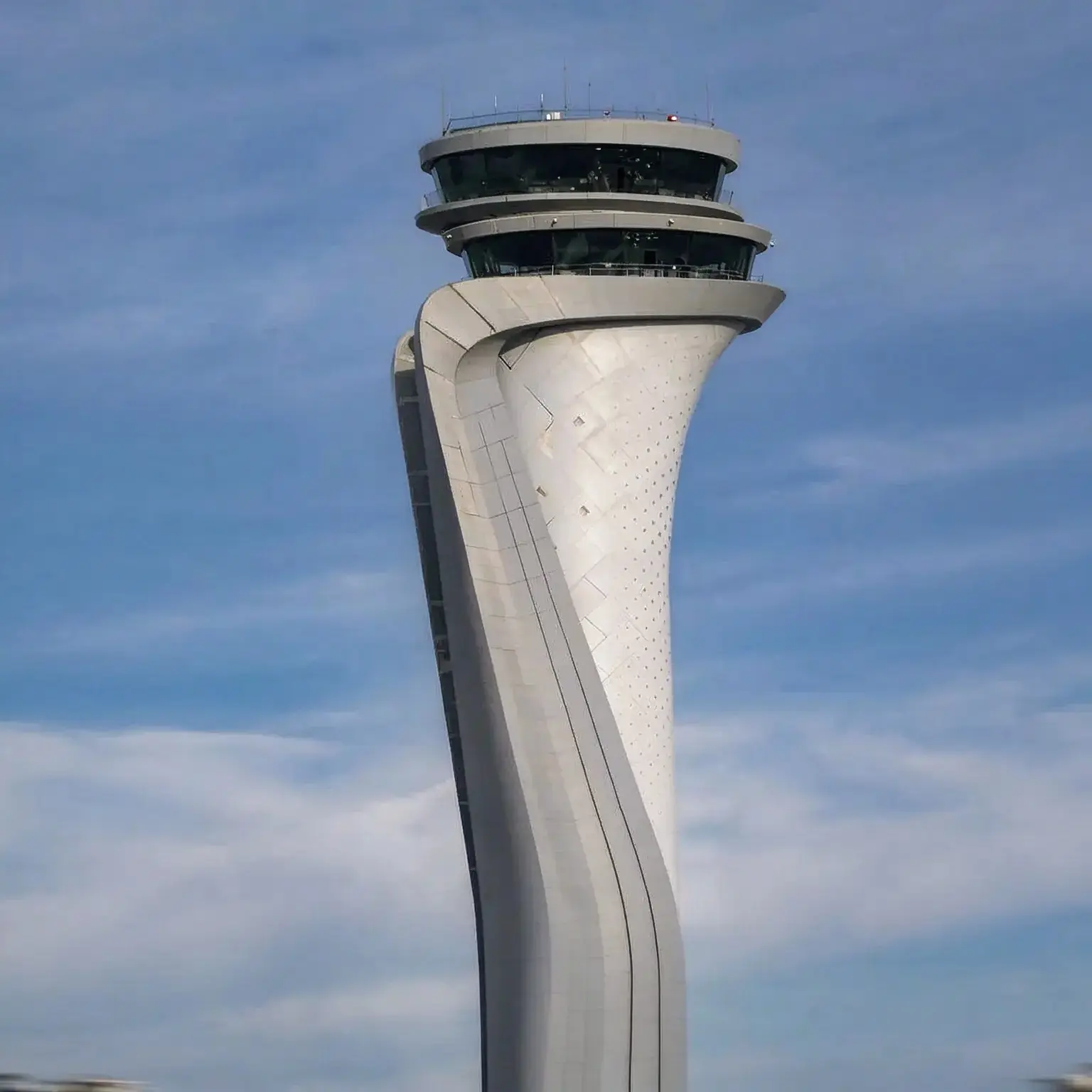
Airport Flight Control Tower
EIHE, a trusted factory manufacturer, delivers Airport Flight Control Tower systems for airports. Control towers cannot afford to shake when severe winds hit an airfield. That is why we fabricate thick steel box columns and heavy diagonal braces for these towers. We keep lateral sway strictly under H/600 during 250 km/h gale gusts. Airport boards get a rigid structure built to ICAO Annex 14 aerodrome safety guidelines.
EIHE provides turn-key Airport Flight Control Tower as a certified manufacturer for airport hubs. Controllers need an unobstructed view across all runways and taxiways. We frame the top cab with slender high-tensile steel mullions and outward-tilted laminated safety glass. Outside jet roar stays outside, keeping the visual room quiet.
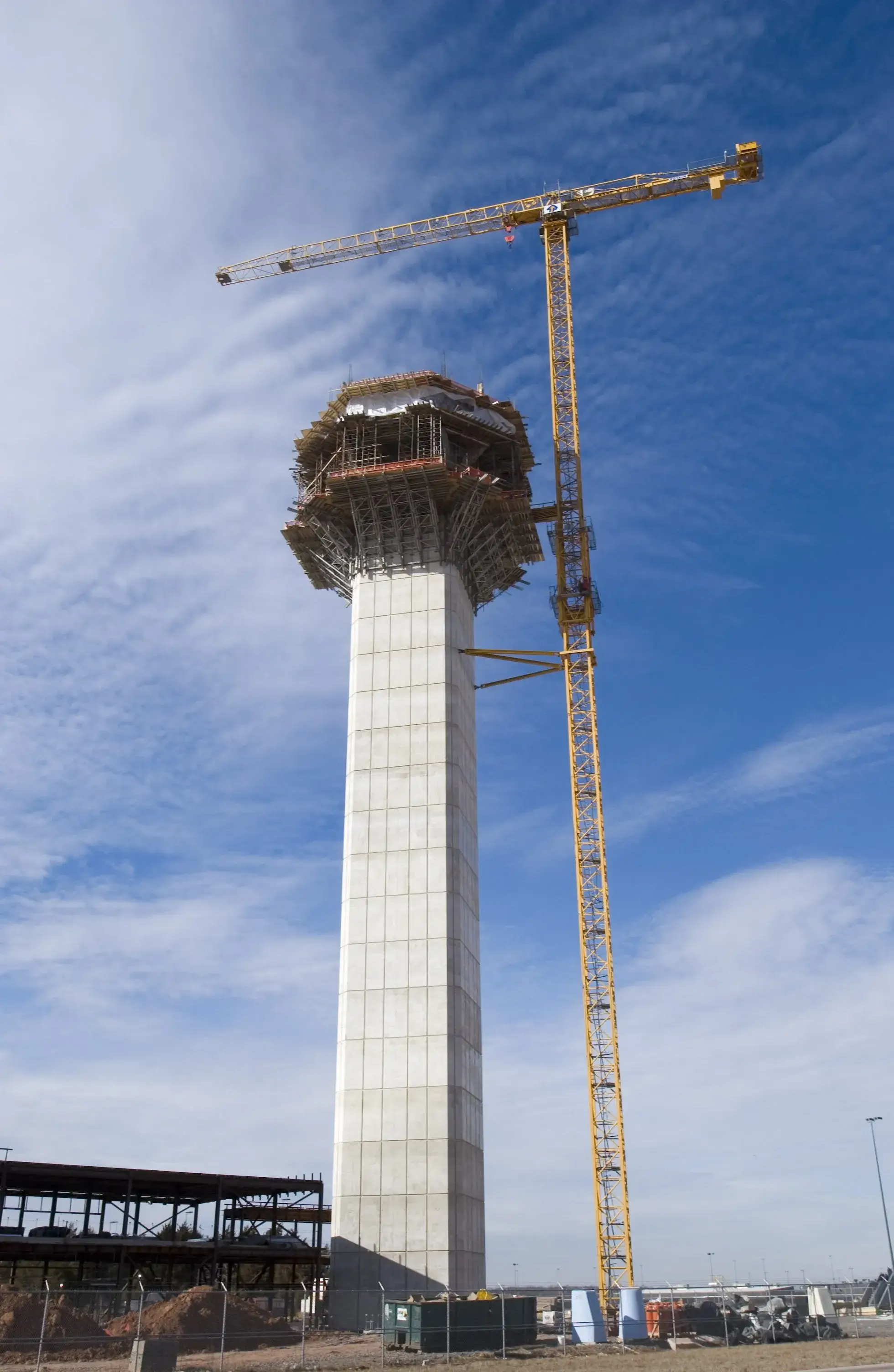
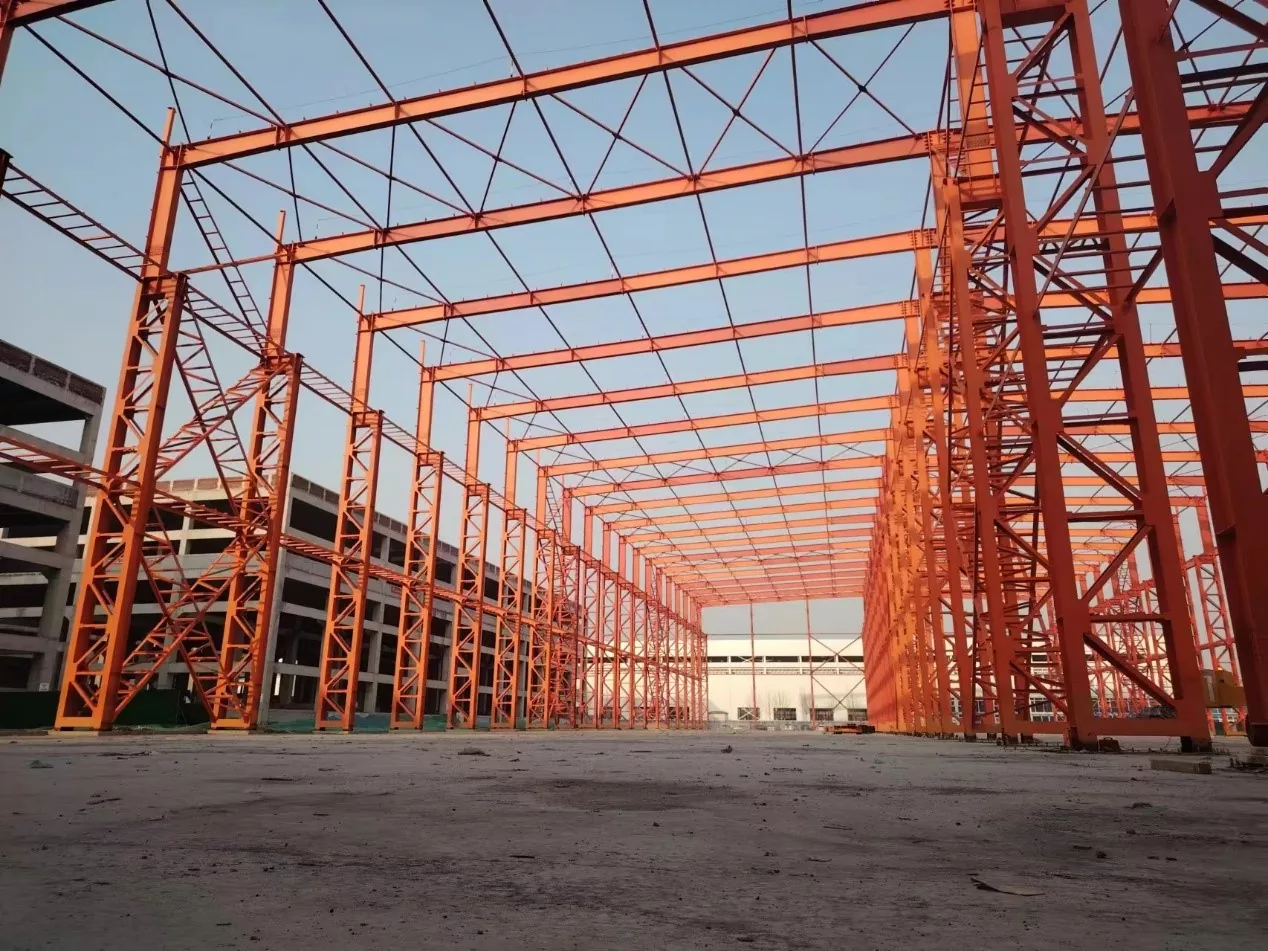
Tower shaft structural lattice erection with crane positioning high-strength braced frame segments.
The bottom floors take care of radar equipment, power generators, and backup avionics. Big air conditioners and backup diesels create steady vibration, so we mount the structural steel floor beams on thick neoprene pads. That keeps ground hum away from flight control monitors.
Key Technical Specifications
Engineering specs for our Airport Flight Control Tower projects include the following parameters:
·Tower Shaft Frame: Thick box-column bents and heavy circular hollow sections (CHS) in high-toughness Q355D steel grade.
·Visual Cab Support: Machine-milled ring girders with cantilever steel brackets carrying outward-slanted acoustic glazing panels.
·Aerodynamic Stability: Designed for sustained 260 km/h wind gusts while keeping total cab lateral deflection under H/600.
·Fire Protection System: Factory-sprayed intumescent thin-film fireproofing coating delivering verified 3-hour structural endurance.
·Aviation Standards: Fully compliant with ICAO Annex 14 airport design recommendations and Eurocode 3 steel provisions.
·Internal Cable Risers: Welded vertical steel chases isolating radar power feeds, high-voltage lines, and redundant traction elevators.
·External Coating: Multi-coat marine fluorocarbon top finish over hot-dip galvanized base members for harsh atmospheric durability.
Verified Project Cases
During a regional civil airport upgrade, our engineering team fabricated and erected a 68-meter air traffic control tower alongside an attached five-story technical operations building.
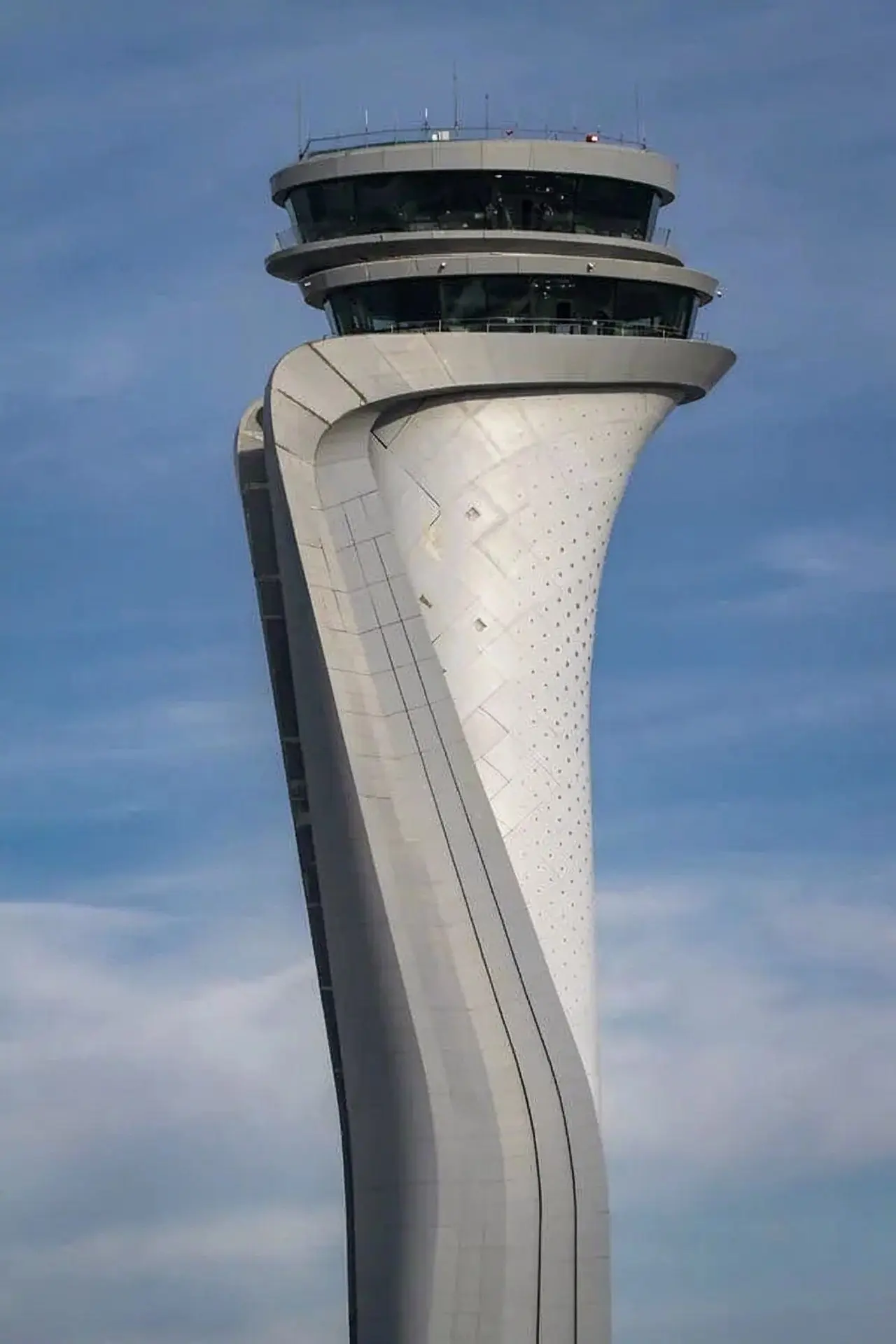
Completed architectural control tower commanding full visual airfield coverage.
Demonstrated structural reliability of our Airport Flight Control Tower towers proved out on this project. Our shop pre-assembled the entire steel observation ring on our factory floor before overseas container shipping. On site, the erection crew bolted and torqued the upper cab in sixteen working days without disrupting scheduled runway flights.
Aviation Standards & Manufacturing Certification
Aviation boards that procure our steel tower systems receive complete ultrasonic testing reports for all critical welds. Our factory pre-drills and numbers every connection plate so on-site bolt-up proceeds cleanly without unexpected delays.
FAQ
Q1: What are the minimum order requirements and engineering consultation workflows?
A1: We provide bespoke fabrication starting from single specialized tower installations. Our initial phase involves reviewing airport civil aviation requirements, height parameters, and radar floor loads to formulate a tailored engineering estimate and structural framing proposal.
Q2: How does the structural design account for severe aerodynamic loads and cab stability?
A2: Our structural engineers perform wind tunnel simulation and dynamic finite element analysis (FEA) to withstand typhoon gusts exceeding 260 km/h. High-stiffness box-column bents and cross-braced lattice frames limit top visual cab deflection to under 1/500 of the total tower height.
Q3: What is the typical fabrication timeline for an aviation control facility?
A3: Detailed structural shop drawings and anchor bolt layout schedules require 14 to 20 days. Precision fabrication of the central tower shaft, cantilevered visual cab ring girders, and internal equipment platforms requires 40 to 60 days in our specialized workshop.
Q4: Which international aviation safety codes and welding standards are enforced?
A4: All structural designs strictly observe ICAO Annex 14 aerodrome specifications and FAA criteria. Structural welding is carried out by certified welders according to EN 1090-2 and AWS D1.1 standards, with complete radiographic (RT) and ultrasonic (UT) inspection records provided.
Q5: What protective surface treatments are applied to resist aviation and marine environments?
A5: Structural members undergo Sa 2.5 grit blasting followed by a thermal-sprayed zinc-aluminum layer and a multi-pass marine fluorocarbon topcoat. This heavy-duty C5 anti-corrosive system delivers verified weather resilience for over 25 years without maintenance.
Q6: How are large prefabricated tower components shipped internationally?
A6: Tower shaft sections are pre-engineered in modular segments matching 40-foot flat-rack and high-cube container constraints. All connection flanges are pre-fitted in the factory, match-marked, and secured with heavy rigging hardware for departure from Qingdao Port.
Q7: What level of erection support does EIHE provide at the airfield site?
A7: We provide complete step-by-step tower erection sequences, crane lifting diagrams, and geometric survey benchmarks. Our senior structural field engineers can be deployed on-site to oversee flange bolting and precision cab alignment within active airfield safety corridors.
Send Inquiry
Contact Info
-
Address
No. 568, Yanqing First Class Road, Jimo High-tech Zone, Qingdao City, Shandong Province, China
-
Tel
-
Email
Welcome to our website! For inquiries about steel frame building, steel structure warehouse, school steel building or price list, please leave your email to us and we will be in touch within 24 hours.
Related Products


News Recommendations