English
- English
- Esperanto
- Afrikaans
- Català
- שפה עברית
- Cymraeg
- Galego
- Latviešu
- icelandic
- ייִדיש
- беларускі
- Hrvatski
- Kreyòl ayisyen
- Shqiptar
- Malti
- lugha ya Kiswahili
- አማርኛ
- Bosanski
- Frysk
- ភាសាខ្មែរ
- ქართული
- ગુજરાતી
- Hausa
- Кыргыз тили
- ಕನ್ನಡ
- Corsa
- Kurdî
- മലയാളം
- Maori
- Монгол хэл
- Hmong
- IsiXhosa
- Zulu
- Yoruba
- অসমীয়া
- ଓଡିଆ
- Punjabi
- پښتو
- Chichewa
- Samoa
- Sesotho
- සිංහල
- Gàidhlig
- Cebuano
- Somali
- Тоҷикӣ
- O'zbek
- Hawaiian
- سنڌي
- Shinra
- Հայերեն
- Igbo
- Sundanese
- Lëtzebuergesch
- Malagasy
- Español
- Português
- русский
- Français
- 日本語
- Deutsch
- tiếng Việt
- Italiano
- Nederlands
- ภาษาไทย
- Polski
- 한국어
- Svenska
- magyar
- Malay
- বাংলা ভাষার
- Dansk
- Suomi
- हिन्दी
- Pilipino
- Türkçe
- Gaeilge
- العربية
- Indonesia
- Norsk
- تمل
- český
- ελληνικά
- український
- Javanese
- فارسی
- தமிழ்
- తెలుగు
- नेपाली
- Burmese
- български
- ລາວ
- Latine
- Қазақша
- Euskal
- Azərbaycan
- Slovenský jazyk
- Македонски
- Lietuvos
- Eesti Keel
- Română
- Slovenski
- मराठी
- Srpski језик


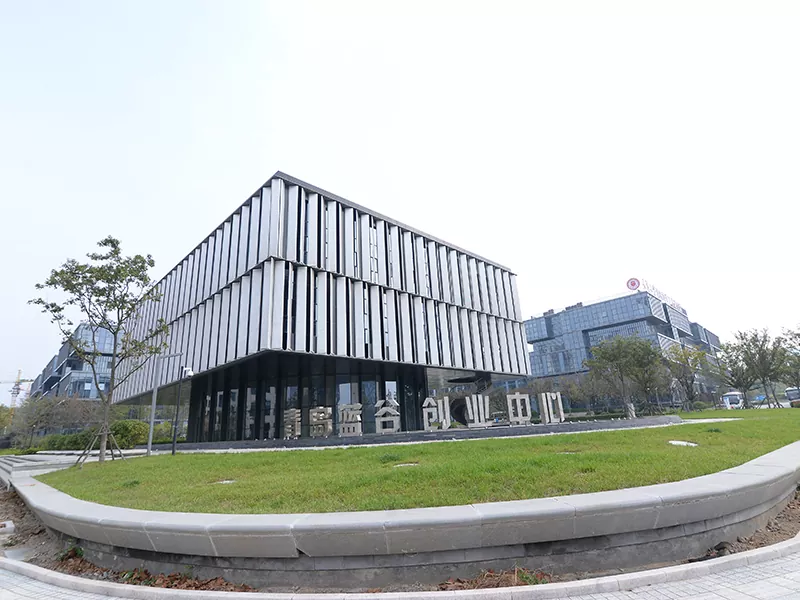
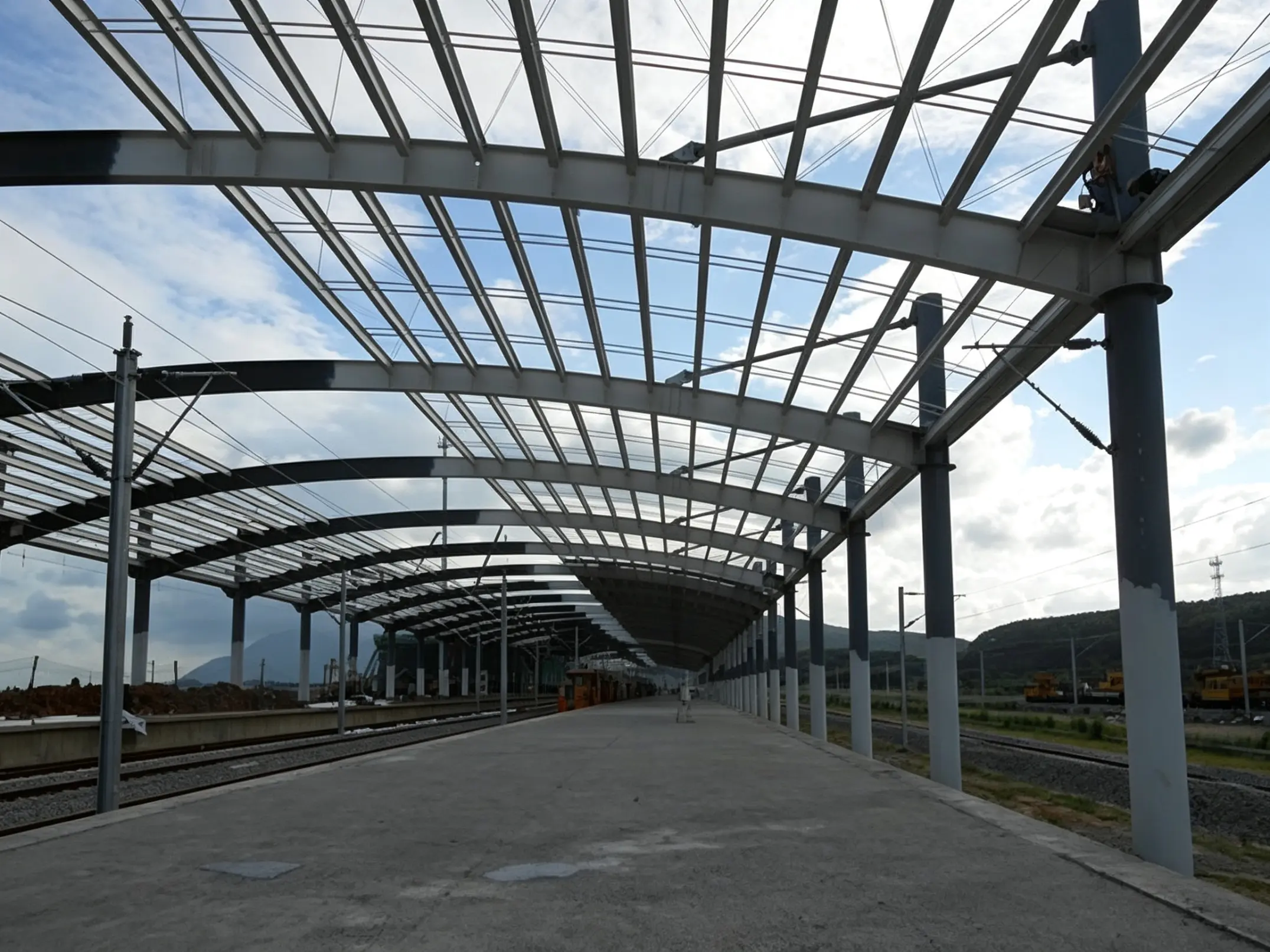
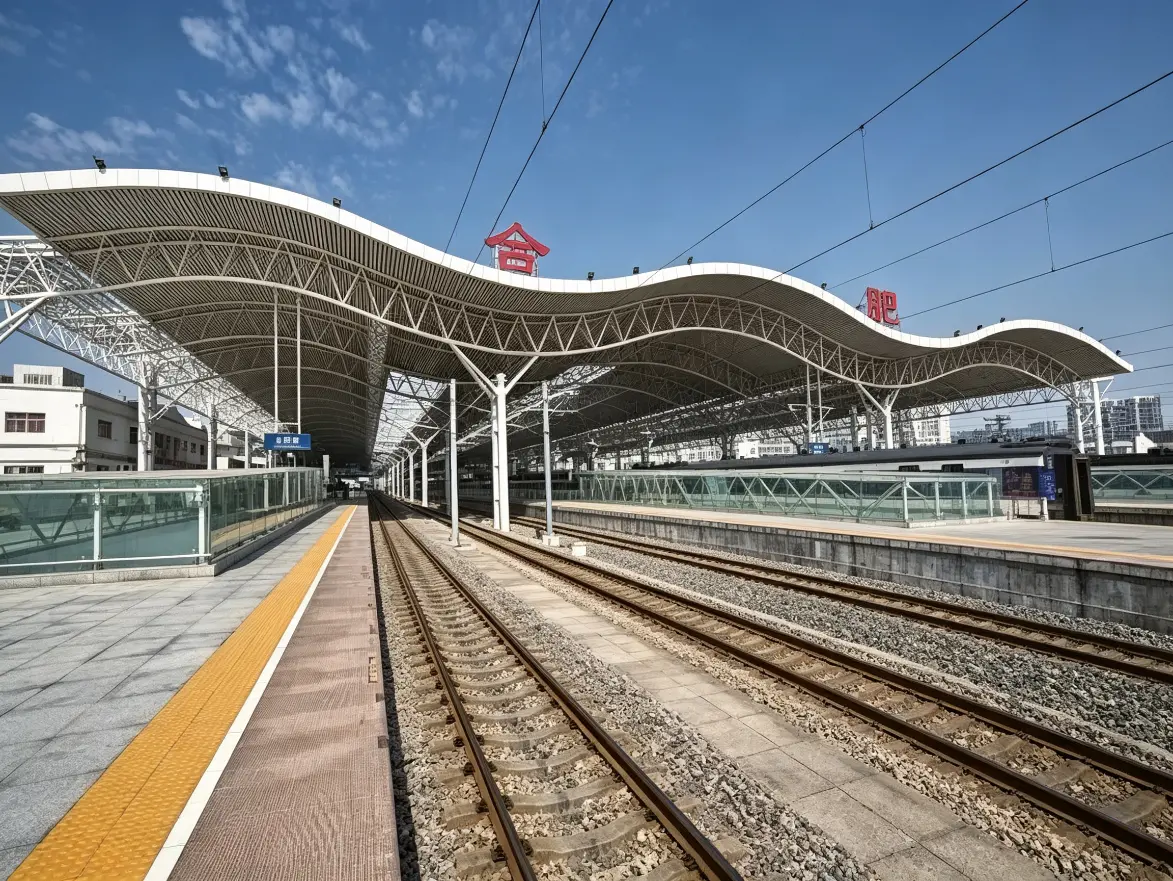
Train Platform Steel Canopy
EIHE, a railway manufacturer, delivers Train Platform Steel Canopy for modern passenger stations. Bullet trains racing past station platforms at 350 km/h create violent gusts of air pressure and sudden suction waves. Platform canopies must endure millions of these aerodynamic wind cycles without loosening bolts or shaking loose ceiling panels. We engineer central Y-shaped steel bents that absorb high-speed slipstream forces while keeping platform walking edges wide open.
EIHE engineers turn-key Train Platform Steel Canopy as a railway supplier of platform shelters. Traditional two-column canopies clutter narrow island platforms with posts, getting in the way of rolling luggage and passenger crowds. Our bifurcated Y-column designs stand strictly down the center of the platform, leaving tactile paving and train doors totally unobstructed.
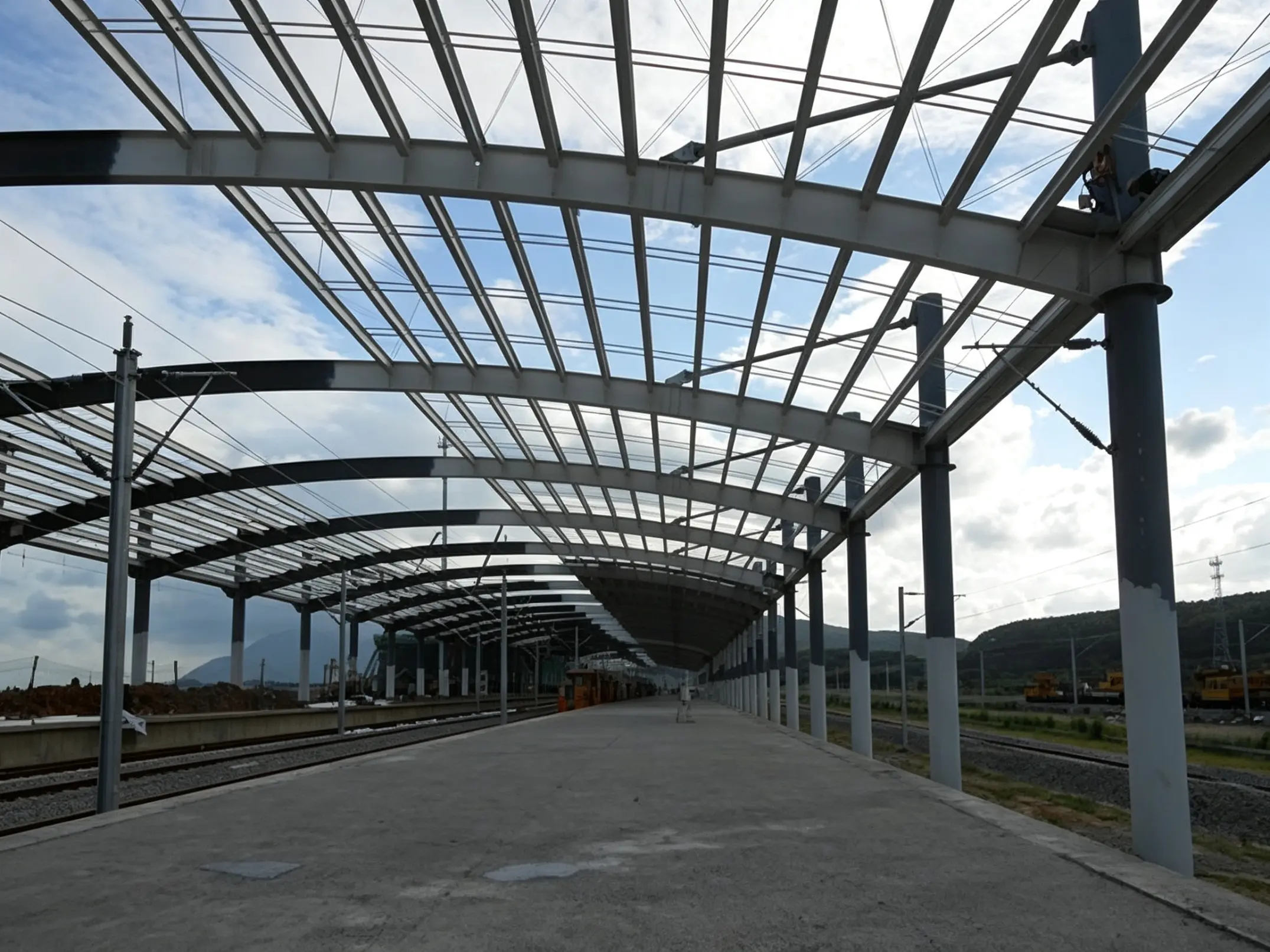
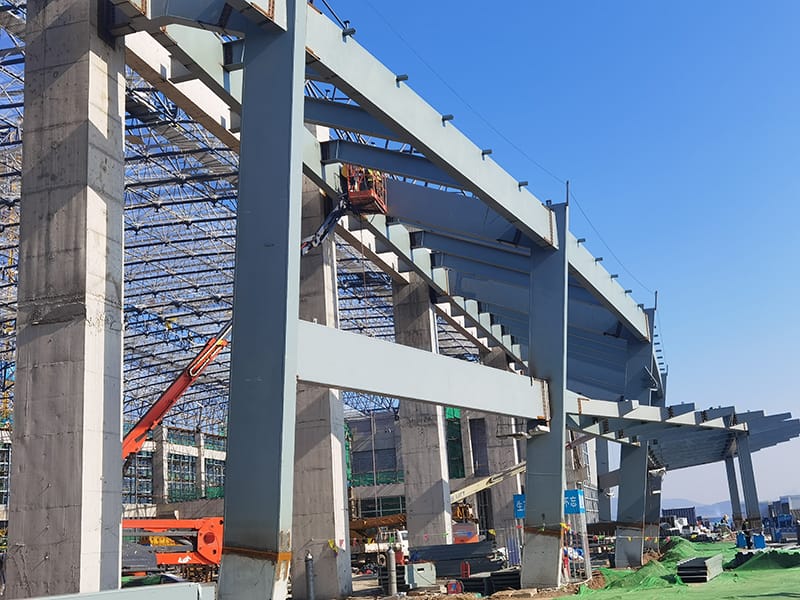
Island platform construction site showing erection of Y-shaped steel bents and curved longitudinal beams
Working over active train tracks requires tight schedules. We pre-assemble our curved canopy modules in our plant and install them during four-hour overnight track shutdown windows. The canopy hides siphonic drainage pipes and electronic departure display cables inside the steel column cores, keeping the passenger boarding area sleek and clean.
Key Technical Specifications
Engineering specs for our Train Platform Steel Canopy projects include the following parameters:
·Bifurcated Column Bents: Centerline Y-shaped bifurcated steel box columns fabricated from thick-flange Q355B structural steel.
·Symmetrical Cantilever: Double-sided canopy cantilevers reaching 7m to 9m over platform boarding edges on both track sides.
·Dynamic Fatigue Resistance: Calculated for 2 million high-speed train slipstream aerodynamic gust pressure and suction cycles.
·Concealed Drainage System: Internal siphonic roof drainage piping with electric trace heating cables hidden inside column shafts.
·Roof Soffit Cladding: Fluorocarbon-coated aluminum honeycomb composite panels with impact-resistant safety glass skylight bands.
·Track Clearance Gauges: Strictly adheres to national high-speed railway safety structure clearance and platform setback envelopes.
·Industrial Protective Coatings: C5-I heavy industrial multi-coat anti-corrosive system designed for 30-year low-maintenance service.
Verified Project Cases
During a high-speed passenger rail corridor expansion, the regional transit bureau contracted EIHE to fabricate and erect island platform canopies across modern commuter stations.
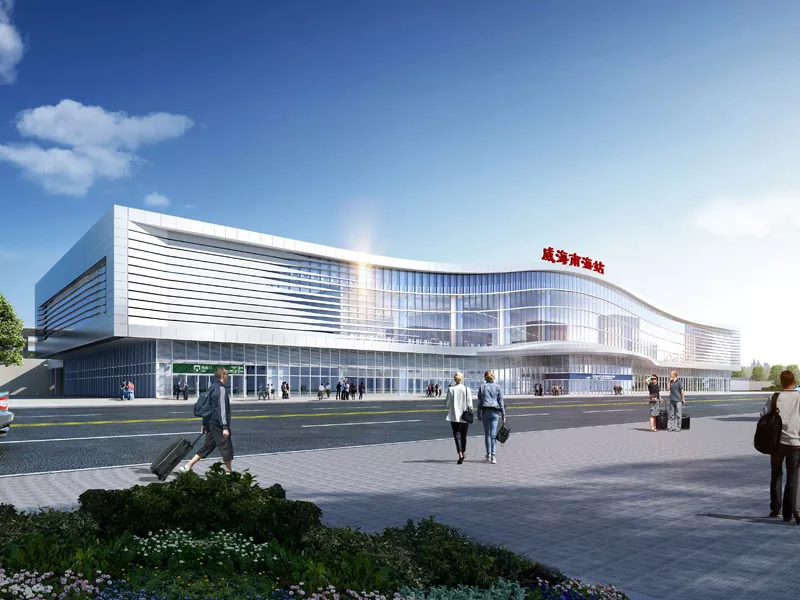
Architectural view of the completed high-speed railway station hub and integrated platform canopy
Practical trackside benefits of our Train Platform Steel Canopy bents delivered smooth passenger boarding. EIHE fabricated 3,100 metric tons of structural steel and installed twelve platform shelters during overnight track maintenance windows. The smooth wave-curved white roofs shield thousands of daily passengers from rain while matching the sleek lines of high-speed bullet trains.
Railway Transit Standards & Inspection
Transit authorities that buy our railway platform shelters receive strict dynamic fatigue test documentation and weld inspection reports. Every component arrives on site numbered and pre-fit, ensuring safe, rapid assembly over electrified railway tracks.
FAQ
Q1: What are the minimum order dimensions and cost evaluation parameters?
A1: Minimum project order is 300 linear meters of passenger platform coverage. Budgets are evaluated based on platform width, cantilever span (6m to 10m on either side), aerodynamic slipstream requirements, and integrated soffit cladding finishes.
Q2: How does the structural design withstand aerodynamic train slipstream suction?
A2: We utilize heavy bifurcated Y-shaped tubular steel bents and rigid box girders engineered for 2 million high-cycle aerodynamic pressure reversals generated by passing high-speed passenger trains traveling at 250 to 350 km/h.
Q3: How quickly can the railway platform shelters be produced and delivered?
A3: Track clearance verification and 3D Tekla BIM detailing require 10 to 14 days. Shop fabrication of column bents, cantilever trusses, and purlins for a major railway hub requires 30 to 45 days under strict quality control.
Q4: What railway transit standards and weld safety certifications are provided?
A4: Structural steel complies with railway infrastructure safety norms, EN 1090-2 EXC3, and ISO 9001. All primary butt welds undergo 100% ultrasonic and magnetic particle non-destructive testing to eliminate fatigue crack propagation.
Q5: How are internal drainage and anti-corrosive protection engineered along active tracks?
A5: Bifurcated columns house concealed siphonic downpipes equipped with electric heating cables to prevent winter icing. Steel surfaces receive heavy zinc-rich primer and polyurethane topcoats engineered to resist locomotive exhaust and brake dust.
Q6: How are curved canopy sections packed and transported for international rail projects?
A6: Cantilever modules are pre-assembled in the shop, match-drilled, and nested into open-top or 40HQ containers with cushioned timber bolsters to prevent finish damage during ocean transport from Qingdao Port.
Q7: What trackside installation coordination and technical support does EIHE offer?
A7: We provide precise track-clearance envelope diagrams, nocturnal lifting schedules, and high-strength torque verification procedures. Our technical team maintains continuous remote coordination with railway transit engineering teams.
Send Inquiry
Contact Info
-
Address
No. 568, Yanqing First Class Road, Jimo High-tech Zone, Qingdao City, Shandong Province, China
-
Tel
-
Email
Welcome to our website! For inquiries about steel frame building, steel structure warehouse, school steel building or price list, please leave your email to us and we will be in touch within 24 hours.
Related Products



News Recommendations